
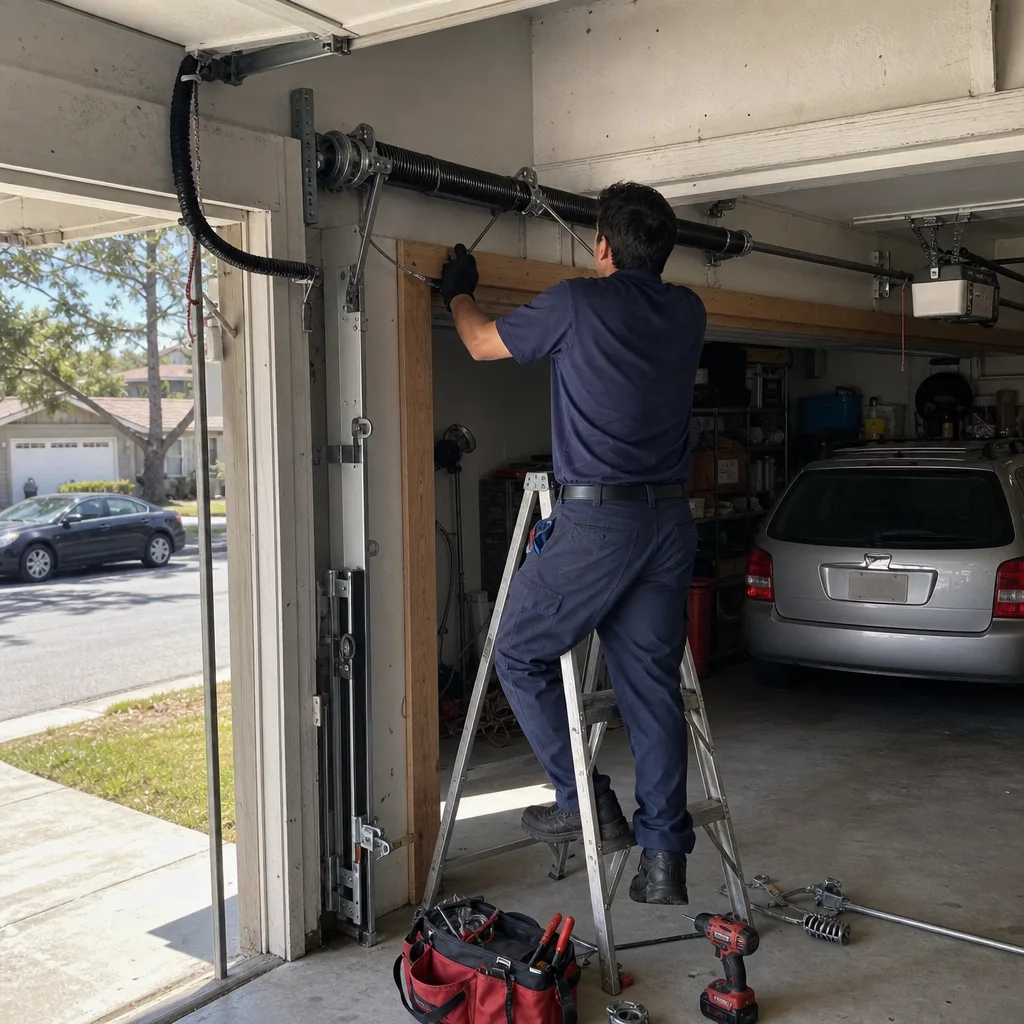
Last updated October 16, 2026
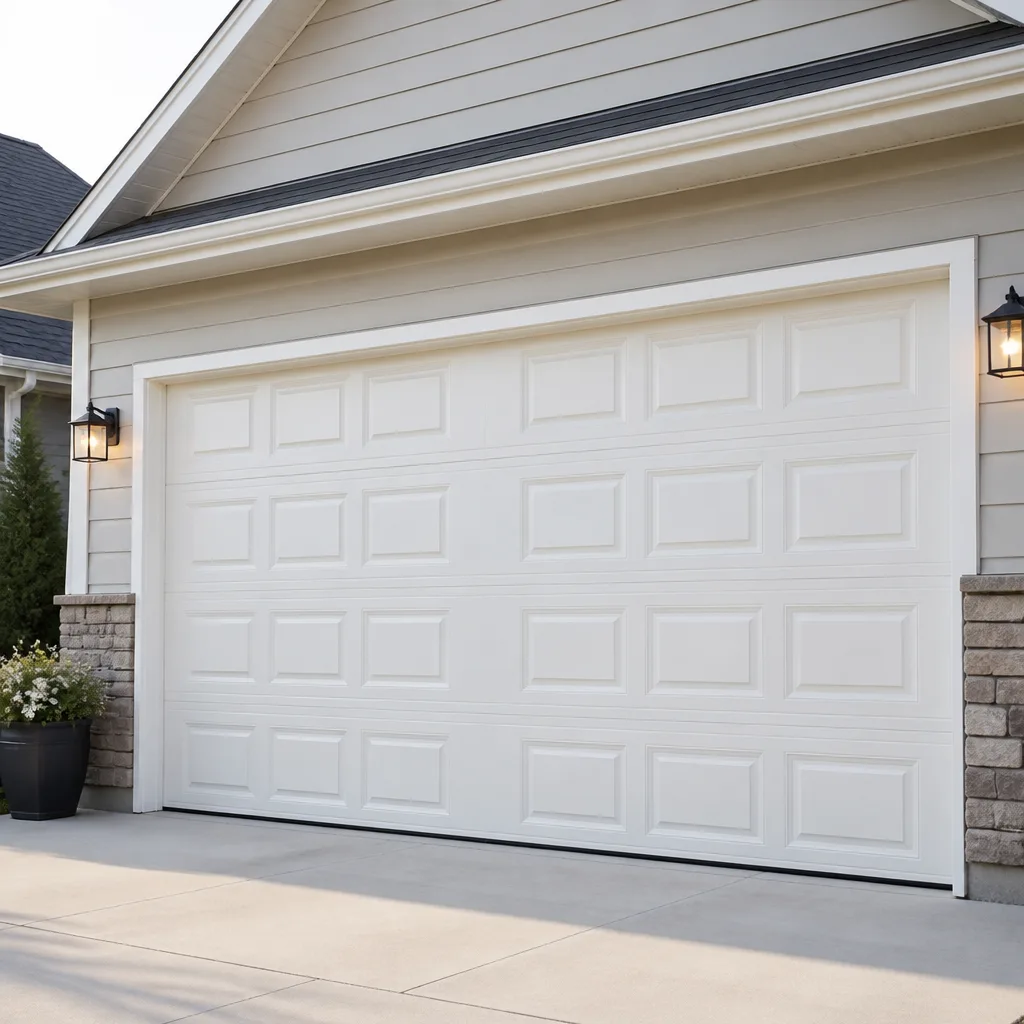 Raised-panel steel
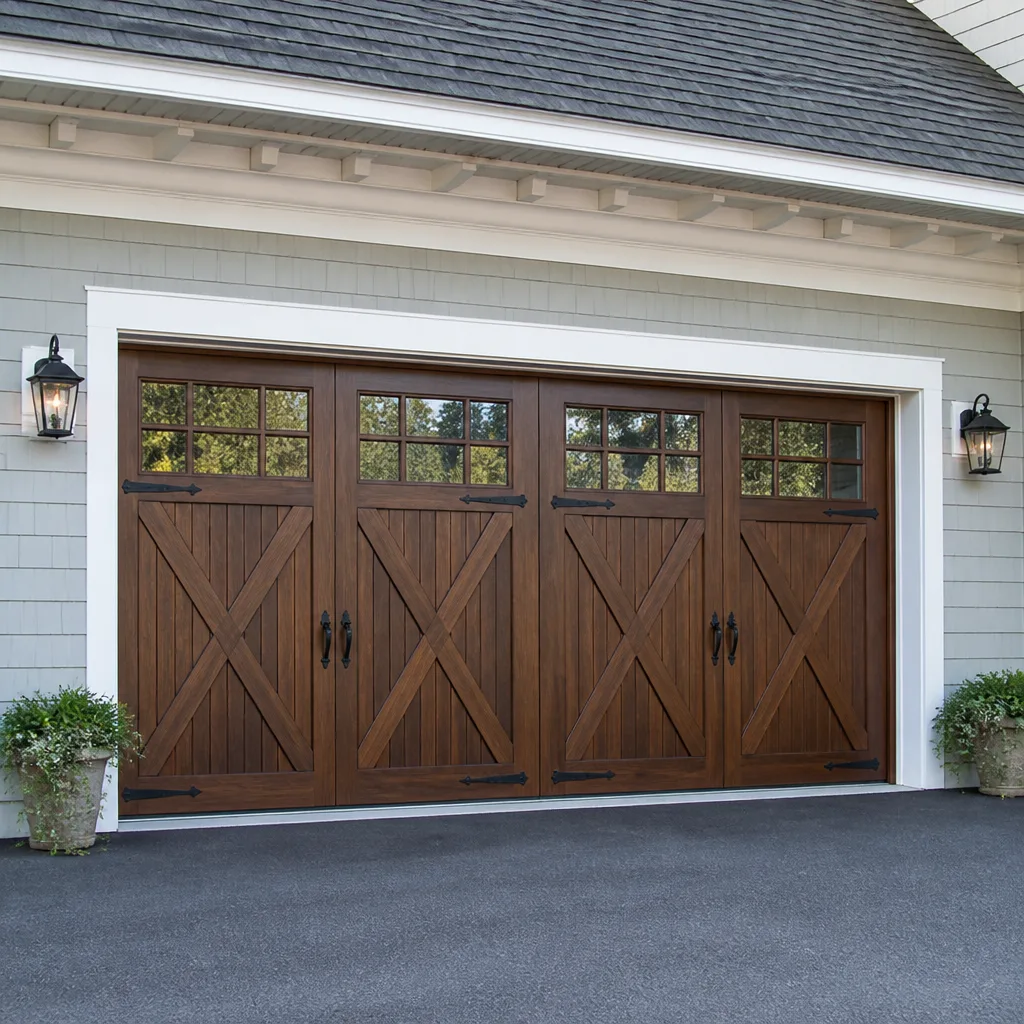 Carriage house
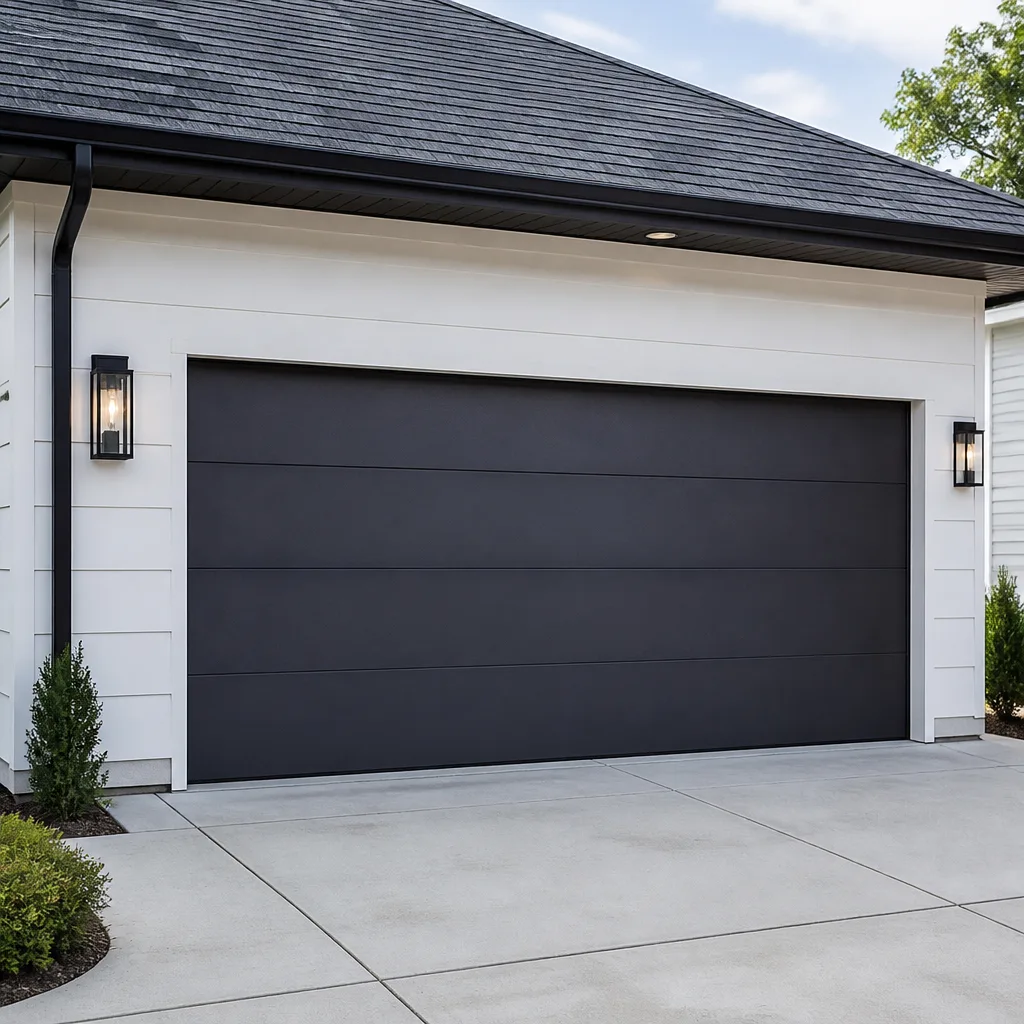 Modern flush
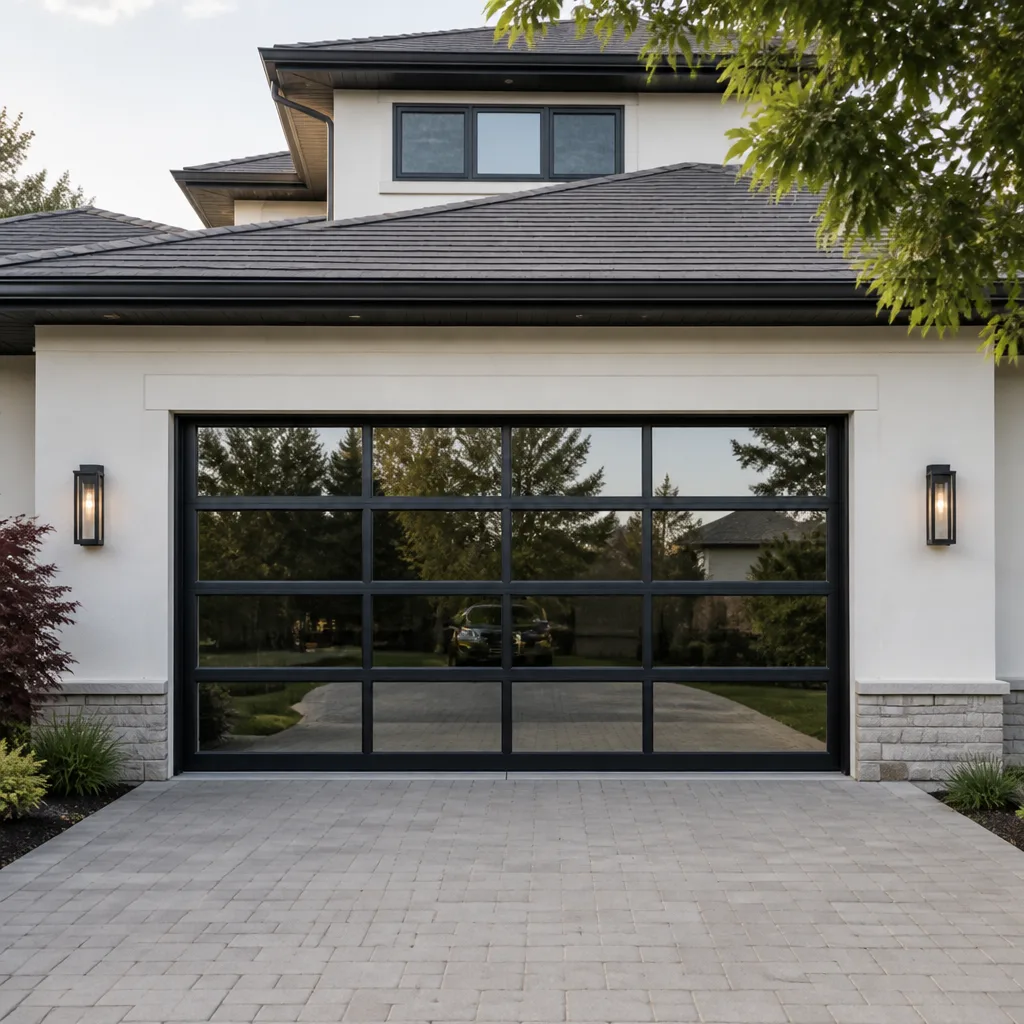 Full-view glass
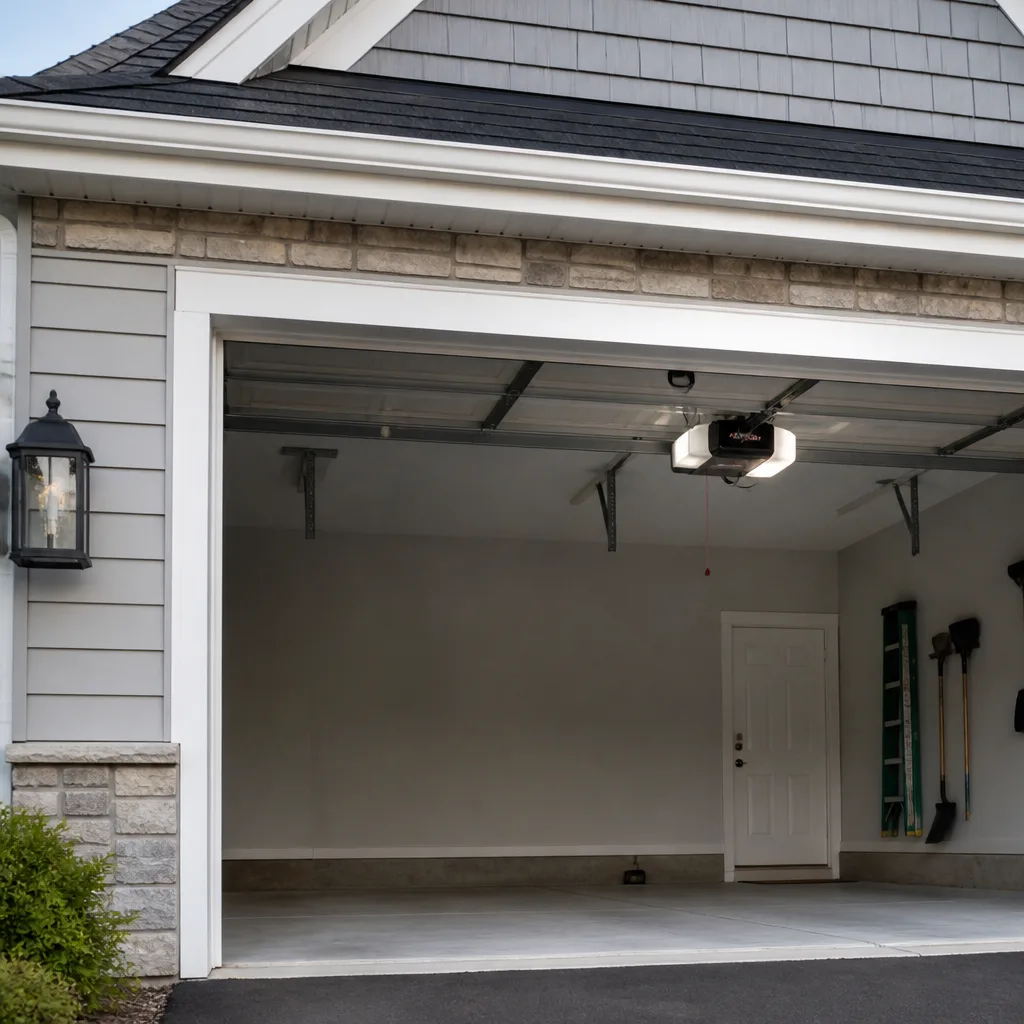 LiftMaster openers
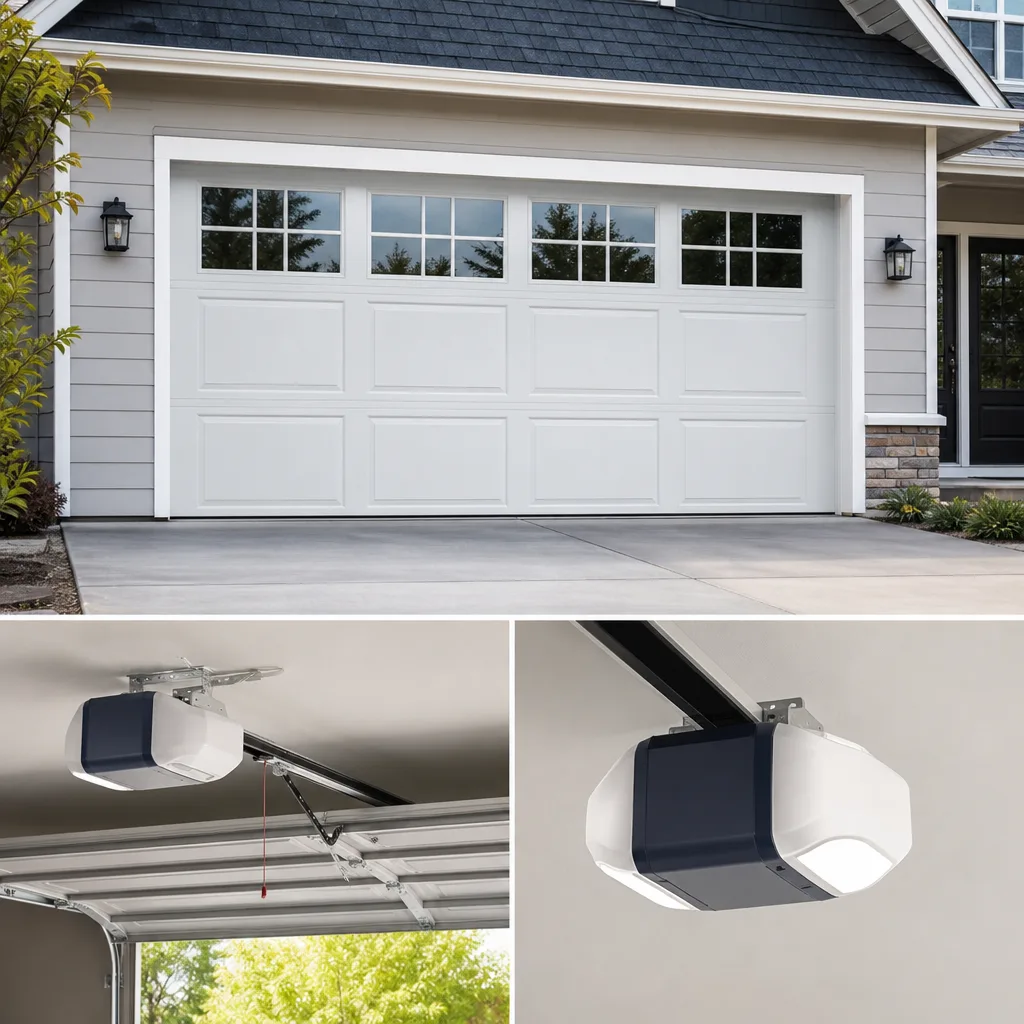 Chamberlain openers
Full 25-point door and opener safety check with every visit - springs, cables, rollers, tracks, and your LiftMaster or Chamberlain opener included
You get a price before we start. It does not change when the truck arrives.
Get your free estimateGarage Door Repair Maintenance Checklist for Long Beach Homeowners
Salt air from the Pacific corrodes unprotected garage door hardware up to three times faster than inland conditions. Most garage door maintenance guides circulating online were written for Phoenix or Denver, where dry heat and cold winters shape the advice, unlike our more guides & resources tailored for coastal conditions. Long Beach is different. The marine layer that rolls in most mornings deposits a fine film of salt and moisture on everything it touches, and your garage door is no exception. This guide gives you a climate-adjusted maintenance checklist built specifically for Long Beach homes: what to inspect, how often, what early corrosion actually looks like, and when a $20 part replacement today prevents a $400 repair six months from now.
Quick Answer
A Long Beach garage door maintenance checklist should include monthly visual inspections of hinges, rollers, cables, and bottom bracket fasteners for salt-air corrosion; a quarterly balance test and force-resistance test you can perform with no tools; lubrication of hinges and rollers twice yearly with a lithium-based or silicone spray (never WD-40); and an annual professional inspection of torsion springs and opener safety mechanisms. In Long Beach’s coastal climate, most hardware needs attention every four to six months rather than the generic “twice a year” advice written for inland homes.
Styles & brands we work with
Table of Contents
- The Climate-Adjusted Inspection Schedule Long Beach Actually Needs
- Where Corrosion Shows Up First: Hinges, Rollers, Bottom Brackets
- How to Perform a Balance Test Without Tools
- The Force-Resistance Test and What the Numbers Mean
- Lubrication by Long Beach Temperature: What to Use and What to Skip
- The Written Log: Why a Service History Changes Your Next Repair Quote
- Common Mistakes to Avoid
- When to Call a Professional
Before we get into the checklist, it helps to understand one thing: garage door repair in Long Beach follows predictable patterns. We know which failures show up in waterfront neighborhoods like Belmont Shore and Naples first, and which ones take longer to appear in inland areas like Bixby Knolls or Plaza. The maintenance items below are ordered by how frequently Long Beach homeowners should address them.
The Climate-Adjusted Inspection Schedule Long Beach Actually Needs
Standard garage door maintenance advice says inspect twice a year, lubricate twice a year, call it done. That calendar works fine in Phoenix. In Long Beach, the salt and moisture cycle runs on a different clock, and if you follow inland advice, you will find corrosion damage that has already progressed past the point of simple cleaning.
Here is the schedule we recommend for Long Beach specifically, based on thousands of service calls across the city:
- Monthly (10 minutes): Visual check of hinges, roller stems, cable attachment points, and bottom bracket fasteners. Look for white or green powdery buildup, rust streaks, or pitting on any metal surface.
- Quarterly (20 minutes): Balance test and force-resistance test. Clean any corrosion you spotted during monthly checks using a wire brush and a dry cloth. Apply lubricant to hinges and roller bearings.
- Every 6 months (30 minutes): Deep clean the tracks with a dry rag. Inspect the torsion spring for rust, gaps, or uneven coil spacing. Check the weatherstripping along the bottom edge and side jambs for cracks or brittleness caused by UV exposure and salt.
- Annually (45 minutes, professional recommended): Full inspection of spring tension, cable integrity, opener force settings, and safety reversal system. This is the appointment that catches what DIY checks miss.
The marine layer is not a small variable. It is the defining variable. Homes within two miles of the water in neighborhoods like Alamitos Beach, Bluff Park, and the Peninsula see visibly faster corrosion than homes in Los Altos or El Dorado Park. If you live closer to the coast, lean toward the shorter end of every interval above. If you are further inland, the schedule holds as written.
Where Corrosion Shows Up First: Hinges, Rollers, Bottom Brackets
Corrosion on a garage door is not random. It follows a pattern, and once you know the pattern, monthly inspections take ten minutes and catch problems while they are still cheap to fix.
Hinges
Door hinges flex constantly. Every open and close cycle works the metal at the hinge knuckle, and that micro-movement wears through protective coatings faster than stationary surfaces. In Long Beach, we see hinge corrosion begin at the bottom of the door first. Salt spray and ocean breeze concentrate at the lower panels, and any scratch or chip in the hinge finish becomes an entry point. Early failure looks like white chalky residue around the hinge pin or small rust freckles on the hinge leaf. Catch it at that stage and a wire brush plus fresh lubricant usually extends the hinge’s life by years. Let it go and the hinge seizes, which overloads the opener motor and can warp the door panel itself.
Rollers
Rollers ride inside the vertical and horizontal tracks, and they carry the door’s full weight. Long Beach homes with steel rollers see rust form on the roller stem and inside the bearing. Nylon rollers resist corrosion better but their steel ball bearings are still vulnerable. What you are looking for: rust staining on the track, a gritty sound when the door moves, or rollers that wobble in the track. Any of those means the bearing is compromised. Worn rollers are one of the most common reasons a door starts shaking or binding halfway up, and here is the part most guides skip: a failing roller does not always announce itself. We have opened dozens of Long Beach garages where the homeowner reported the door “making a funny noise for a month” and found a roller completely seized, carving a groove into the track.
Bottom Bracket Fasteners
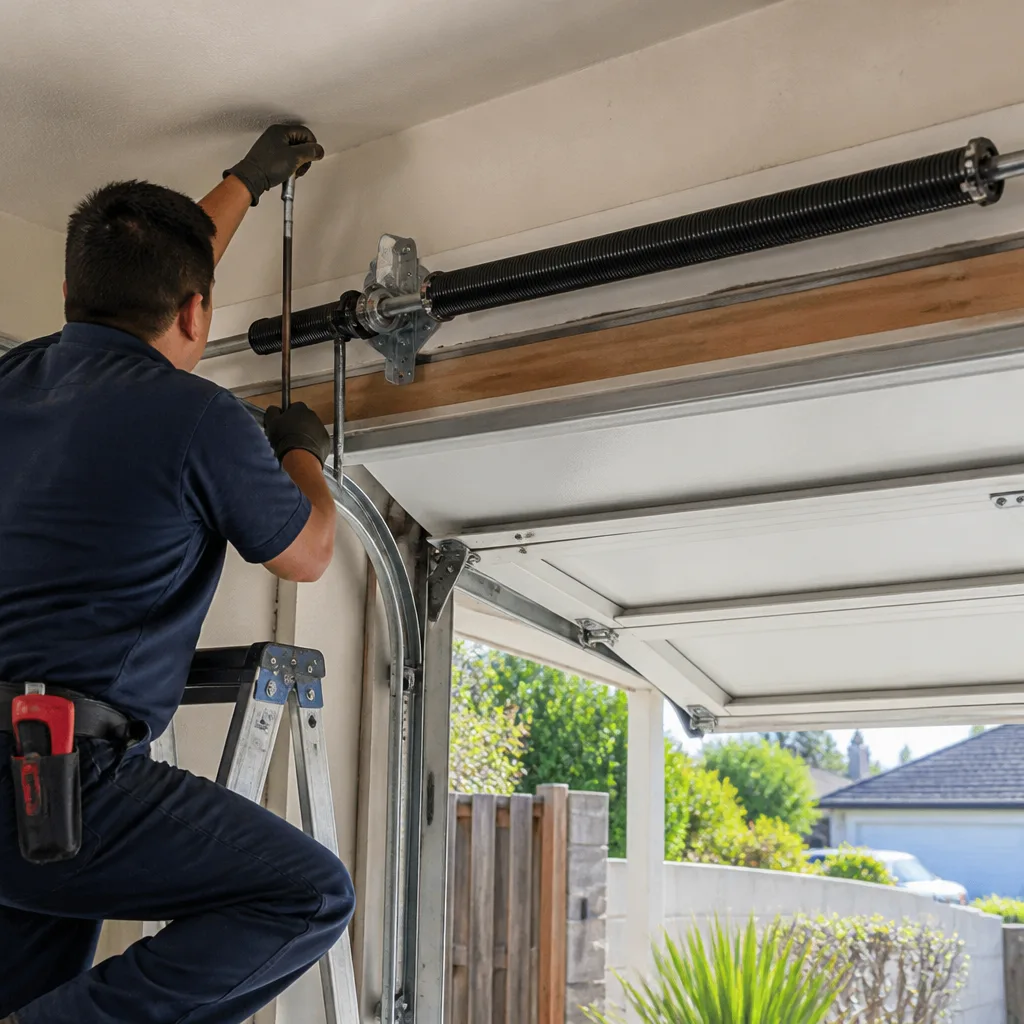
This is the failure point we genuinely worry about. The bottom brackets anchor the lift cables that carry the full tension load of the door. In coastal air, the lag screws and bracket plates corrode first because they sit at the lowest point of the door, in the dampest air, often with direct contact to a concrete floor holding moisture. When a bottom bracket fails, the cable releases under tension, and the door can drop suddenly. That is not a cosmetic problem. It becomes a safety event.
During every monthly check, look directly at the bottom bracket on both sides. If you see rust forming around the screw heads or the bracket plate itself, that bracket needs professional inspection sooner rather than later. Do not attempt to tighten or remove these fasteners yourself. The cable running through that bracket is under enough tension to cause serious injury if it releases. In our experience across Long Beach, bracket corrosion shows up more aggressively in older homes along the coast, particularly in garages that are not insulated or climate-controlled.
For homeowners dealing with cable issues specifically, garage door cable repair in Long Beach is a separate service area with its own set of warning signs. Cables that look frayed, stretched, or are showing rust at the drum end need attention before they snap.
How to Perform a Balance Test Without Tools
A garage door that is properly balanced stays put wherever you leave it. That is not a nice-to-have. It is the single most important test of door health, because an unbalanced door forces the opener motor to work harder, shortens spring life, and accelerates wear on every moving component. The balance test takes two minutes and requires no tools.
Here is the step-by-step:
- Close the door completely.
- Pull the red emergency release cord hanging from the opener rail. This disconnects the door from the opener carriage. The door should now move freely by hand.
- Grasp the door by its bottom edge or the handle and lift it to waist height, approximately three feet off the ground.
- Let go completely.
A properly balanced door stays at that height. It may drift an inch or two in either direction, but it should not fall closed or fly open. If the door drops to the floor, the springs are under-tensioned or worn, and the opener motor is being asked to lift weight it was never designed to handle. If the door shoots upward, the springs are over-tensioned, which is just as dangerous in its own way.
Perform this test quarterly. In Long Beach, we recommend doing it more often during late summer, when the combination of heat and humidity causes metal components to expand and shift. Write down the results in your log (covered below) so any contractor can see whether the door’s balance has changed over time. A door that held steady in March and drops to the floor in September is telling you something specific: the spring is losing tension gradually, not failing suddenly.
The Force-Resistance Test and What the Numbers Mean
The force-resistance test checks the second thing every door should do correctly: reverse when it hits resistance. This is a safety system, not a convenience feature. Since federal safety standards took effect in the early 1990s, every automatic opener must reverse when it encounters resistance while closing. If yours does not, you have a door that can and will crush whatever is under it, including a child, a pet, or a bicycle.
The test is simple:
- Place a solid object in the door’s closing path. A 2×4 laid flat works well. A filled cardboard box also works.
- Close the door using the wall button or remote.
- Watch what happens when the door reaches the object.
The door should reverse within one to two seconds of contact, and it should reverse with enough authority to fully reopen. If it hesitates, if it crushes the object partially before reversing, or if it does not reverse at all, the opener’s force settings are wrong or the safety reversal mechanism has failed. Either way, it needs correction before the door is used again.
This test is separate from the photoelectric sensor check, where you wave your hand through the invisible beam at the bottom of the door opening while the door is closing. The door should stop and reverse immediately when the beam is broken. Test both mechanisms every quarter.
If either test fails, you are dealing with a problem that is usually fixable the same day. For Long Beach homeowners, garage door opener repair in Long Beach typically covers force setting adjustments, sensor realignment, and replacement of failed safety components. Do not run a door that fails these tests. The convenience of an automatic door is not worth the risk.
Lubrication by Long Beach Temperature: What to Use and What to Skip
Every garage door guide tells you to lubricate. Almost none of them tell you what Long Beach’s specific climate does to lubrication decisions. Here is what actually matters.
Long Beach temperatures range from the mid-40s on the coldest winter mornings to occasional 90-plus days in August and September. That range is mild by national standards, but the constant variable is humidity from the marine layer, which rarely drops below 50 percent and sits above 70 percent for much of the year. High humidity changes two things: which lubricants work, and which ones actively make the problem worse.
Use: A white lithium grease spray or a silicone-based spray lubricant. Both resist the moisture-driven breakdown that plagues lighter oils, and both stay in place on hinge pins and roller bearings without running off. Apply to hinge knuckles, roller bearings, the torsion spring, and the lock assembly.
Avoid: WD-40 and similar penetrating oils. These products are solvents with a thin lubricant layer, not true lubricants. In Long Beach’s humid air, WD-40 evaporates within weeks and leaves behind exactly the wrong thing: a sticky film that attracts dust, sand, and salt particles. We have seen doors lubricated with WD-40 become noisier than doors that were never touched, because the product acted as a binding agent for coastal grime rather than a protective layer. The same goes for generic household oils and motor oil.
Frequency in Long Beach: lubricate hinges and rollers every four months, not twice a year. The salt air strips lubricants faster here. If your garage is within a mile of the ocean, shorten that interval to every three months during summer and fall, when onshore flow is strongest.
The Written Log: Why a Service History Changes Your Next Repair Quote
Here is a practice almost no homeowner adopts, and it is the single most valuable piece of documentation you can produce as a Long Beach garage door owner: keep a written log of every inspection and every service performed on the door.
The log does not need to be elaborate. A simple sheet or notebook page works. Record the date, what you inspected, what you found, what you lubricated or cleaned, and the results of your balance and force tests. Keep it in the garage, near the door, where you will actually see it.
Why this matters to your wallet: when a contractor quotes a repair on a door with a written history, the conversation changes completely. Instead of “we’ll open it up and see what’s going on,” the technician can look at your log and understand the door’s story. That spring was replaced in 2021. The rollers started making noise in late 2023. The balance test failed for the first time last month. That information directs the technician to the root cause faster, which means less diagnostic time, and it prevents misdiagnosis driven by an incomplete picture.
A written log also protects you from being sold work you do not need. If a repair company tells you the springs are failing but your log shows a stable balance test for the past year, you have grounds to ask harder questions. In a city like Long Beach, where some operators quote prices verbally and change them at the door, documentation is leverage.
What to write down for each entry:
- Date and name of person performing the check
- Balance test result (held steady, dropped slowly, shot upward)
- Force-resistance test result (reversed immediately, hesitated, failed)
- Any corrosion found and what action was taken
- Lubrication performed (product used and which components)
- Any repair made, by whom, and the cost
This log takes five minutes per entry. Over five years, it becomes the most complete service history any contractor could ask for.
Common Mistakes to Avoid
- Following an inland maintenance calendar. Twice-a-year lubrication written for Phoenix does not hold up against Long Beach’s constant marine-layer moisture. Salt air accelerates everything. Shorten your intervals.
- Lubricating with WD-40. WD-40 is a water displacer and penetrant, not a lubricant. In coastal humidity, it evaporates fast and leaves behind a sticky residue that collects salt and sand, making the door noisier over time. Use lithium or silicone spray instead.
- Skipping the force-resistance test. Most homeowners check that the door goes up and down and call it good. The reversal test is a safety system check. A door that fails it is dangerous, not just inconvenient.
- Ignoring white powdery buildup on hinges and brackets. That white residue is the beginning of serious corrosion. A wire brush and dry cloth at the first sighting costs nothing. Waiting until the part seizes means component replacement.
- Tightening or adjusting bottom bracket fasteners yourself. The lift cables running through those brackets are under high tension. A cable releasing while you are working on it can cause severe injury. This is a professional-only task.
- Not keeping a written maintenance log. Without a history, every new contractor starts from zero. A log gives them the full picture and protects you from being sold unnecessary work.
- Using generic big-box store replacement parts. Doors built by Genie, Clopay, Amarr, and other major manufacturers are engineered to specific tolerances. Off-brand rollers or hinges often fit poorly and wear out faster, especially in Long Beach’s humid air.
When to Call a Professional
Some garage door issues are DIY territory. Others are not, and knowing the difference is the most important maintenance skill you can develop-see our How to Hire a Garage Door Contractor in Long Beach: A Step-by-Step Guide for help choosing the right pro. Call a professional if you see any of the following: a bottom bracket showing rust or loose fasteners; a torsion spring with visible gaps, rust, or uneven coil spacing; a cable that is frayed, stretched, or rusted at the drum; a door that fails the balance test or force-resistance test; or any roller that has seized or is carving a groove into the track. All of these involve components under tension or safety systems that must function correctly. None of them are safe to attempt without training and the right tools. Brock Garage Doors Long Beach offers free estimates in Long Beach, and every repair includes a written price before work starts and a written 365-day guarantee. Call (562) 337-3993 to schedule.
See the difference
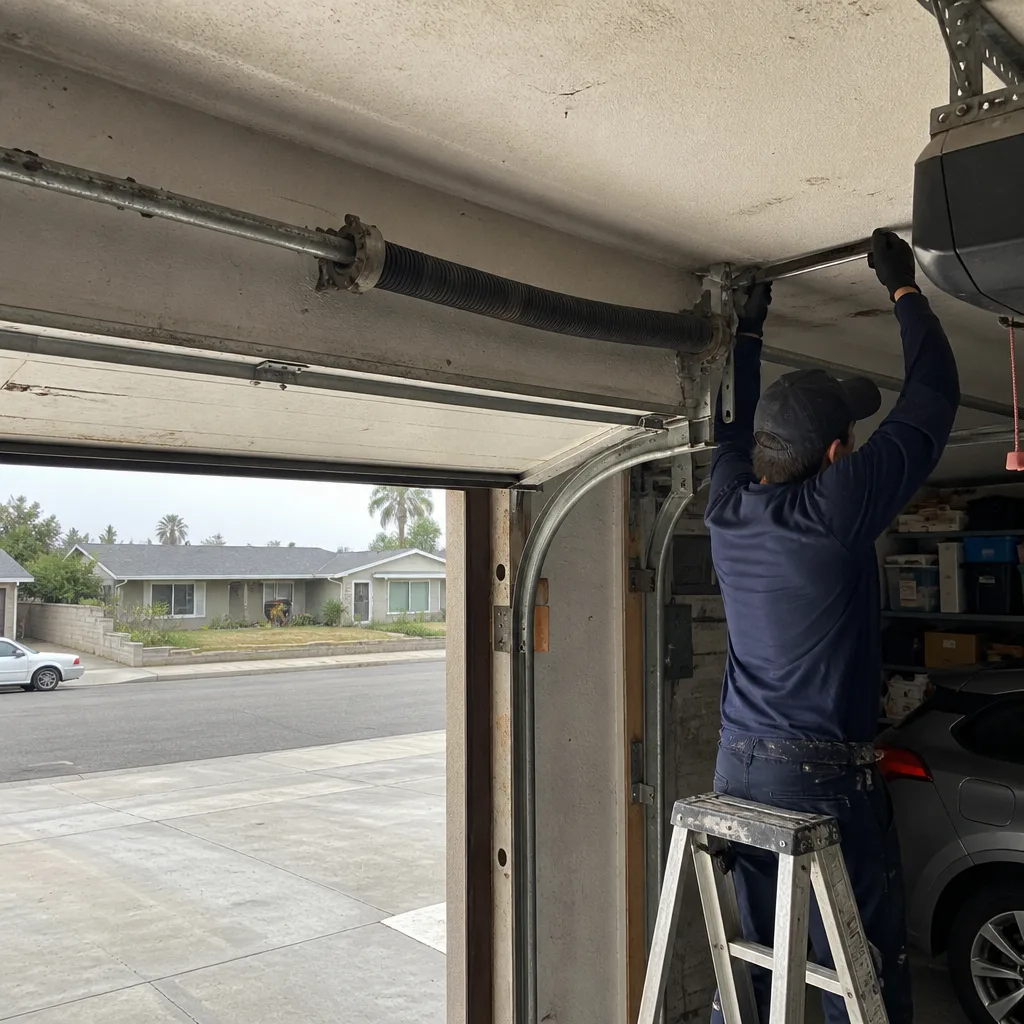 Before
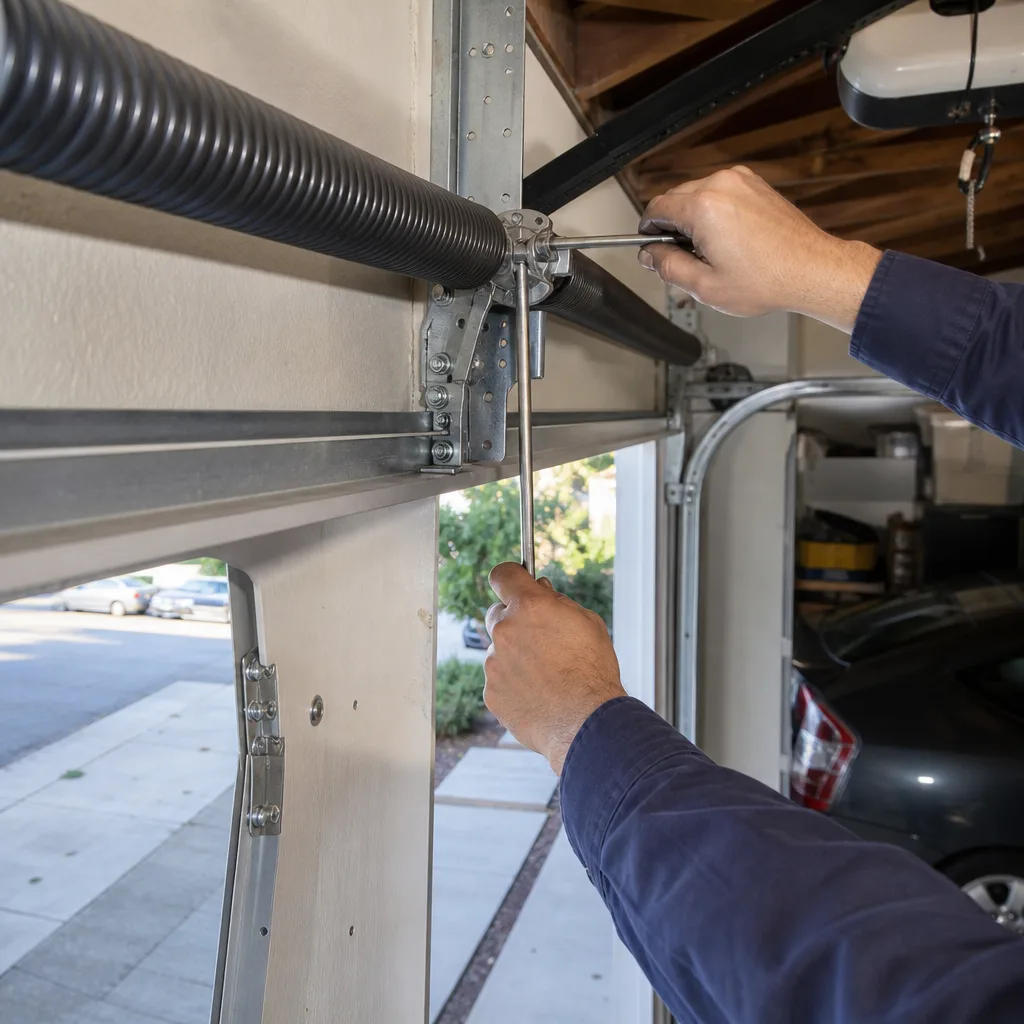 After
After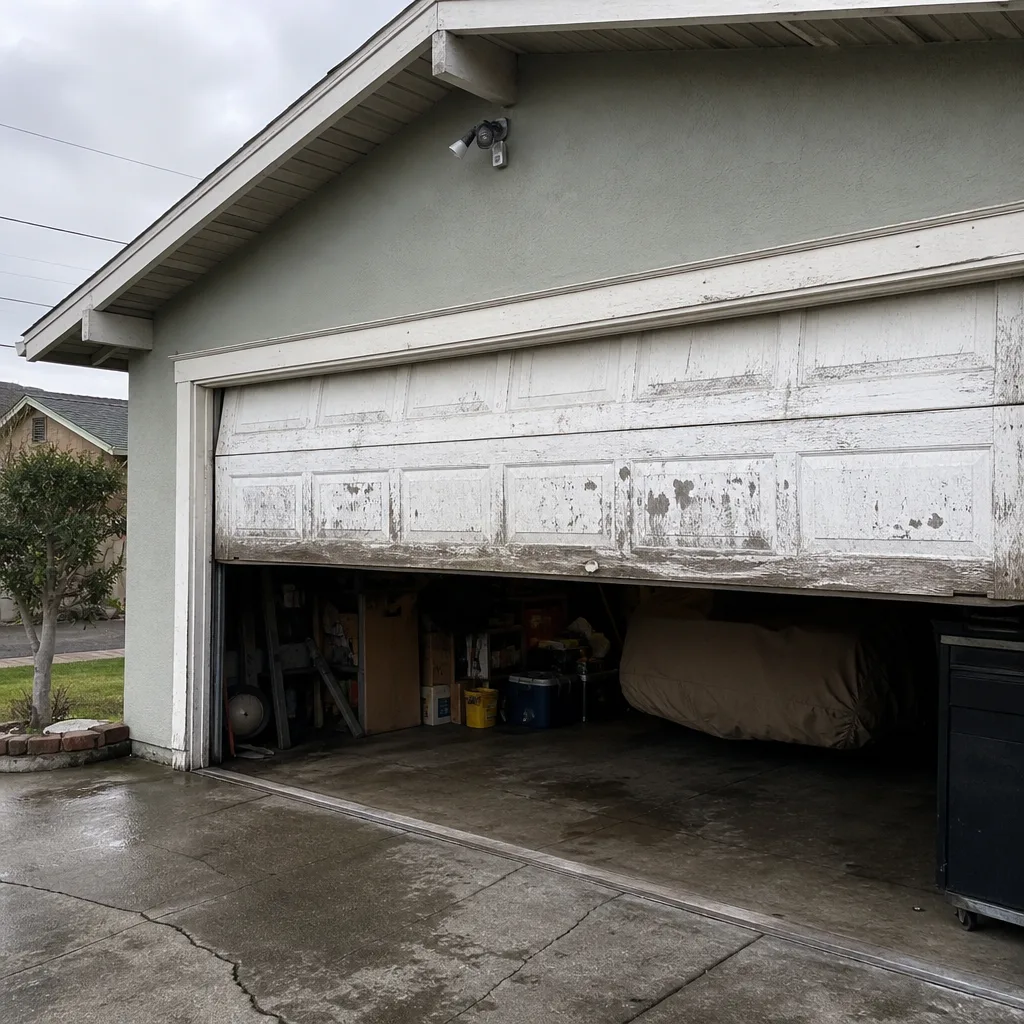 Before
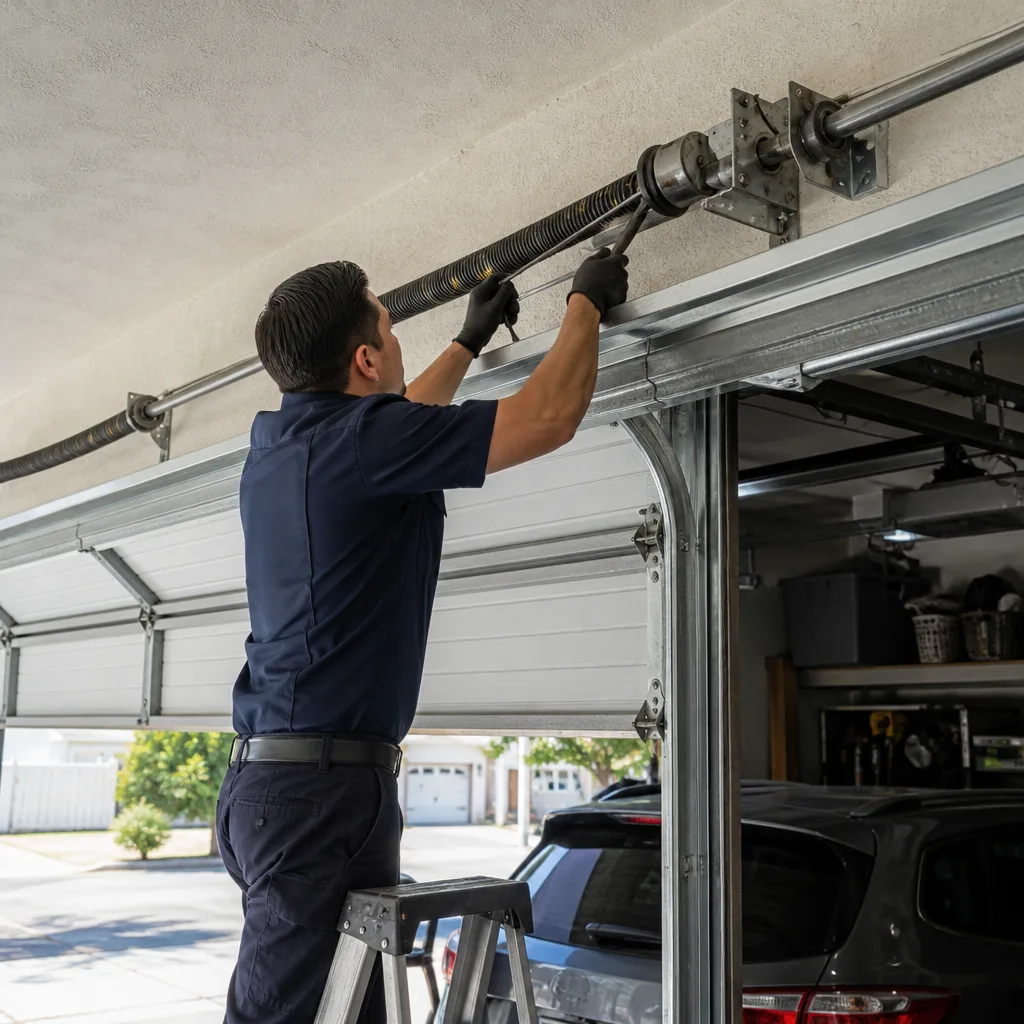 After
After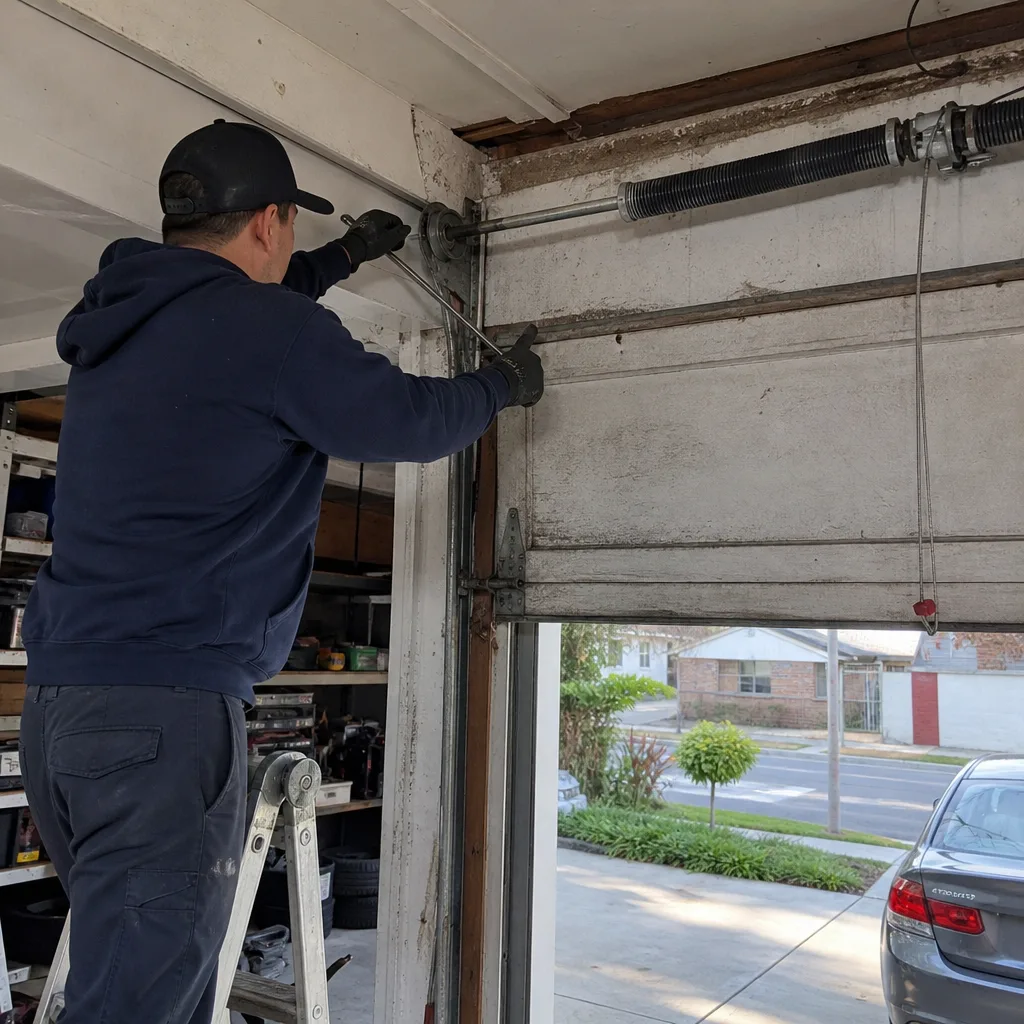 Before
 After
AfterFrequently Asked Questions
Every four months. Long Beach’s coastal humidity and salt air strip lubricants faster than inland climates, so the standard twice-a-year interval leaves your hinges and rollers running dry for extended periods. If you live within a mile of the ocean, lubricate every three months during summer and fall. Use a white lithium grease or silicone spray, and never WD-40, which leaves a sticky residue that attracts salt and sand.
Fail the balance test. Close the door, pull the emergency release, lift the door to waist height, and let go. If it drops to the floor, the springs are losing tension and need professional attention. Other Garage Door Warning Signs: A Long Beach Homeowner’s Reference Guide includes a visible gap in the torsion spring coil, rust forming on the spring surface, or the door suddenly feeling heavier when you lift it manually. Long Beach’s salt air can accelerate spring corrosion, especially in uninsulated garages near the coast.
Most maintenance tune-ups in Long Beach run between $85 and $160, depending on whether the technician replaces small parts like rollers or hinge fasteners during the visit. An inspection-only visit is typically on the lower end. Replacing worn rollers or hinges adds to the total, with individual roller replacements typically running $10 to $25 per roller. Ask for a written quote before any work begins so the price you approve matches the invoice.
Standard torsion springs are rated for roughly 10,000 cycles, which typically translates to seven to ten years of normal use. In Long Beach, spring life can be shorter for homes within a mile of the ocean, where salt air accelerates rust formation on the spring surface. Rust creates friction and stress points that shorten spring life. If your log shows the springs are more than seven years old and the door is failing the balance test, factor replacement into your budget. Most torsion spring replacements in Long Beach run $180 to $340, including parts and labor.
You can and should perform the monthly and quarterly checks yourself. The annual inspection is different. A professional inspection includes measuring spring tension precisely, checking cable wear at the drum, testing opener force settings against manufacturer specifications, and verifying the safety reversal system works correctly. These are measurements and adjustments that require training and specialized tools. In our experience across Long Beach, the annual visit is where we catch most spring and cable failures before they happen.
Not necessarily. Doors from manufacturers like Clopay and Amarr come in corrosion-resistant configurations, including rust-resistant hardware and composite or vinyl construction, that hold up much better in salt air than standard steel doors with cheap hardware. If your door is otherwise in good shape, upgrading the hardware (hinges, rollers, brackets, cables) often extends its life by years. If rust has penetrated the door panels themselves or the frame, replacement becomes the more honest option. A professional evaluation gives you the facts either way. Call (562) 337-3993 for a free assessment.
If you are maintaining a door that needs repair-level attention, Brock Garage Doors Long Beach can evaluate your door in person and give you a written price before any work starts.
The Bottom Line
A garage door in Long Beach does not get the luxury of generic maintenance advice. The marine layer, the salt in the air, and the humidity that never really leaves all work against your door’s hardware around the clock. The checklist above gives you what inland guides miss: a four-month lubrication cycle, monthly corrosion checks focused on the three failure points that matter most, balance and force tests you can run without tools, and a written log that turns your door’s history into protection against bad repair quotes. Do the monthly checks. Keep the log. And when something fails the tests, get a professional involved-our Garage Door Repair team can help before a small corrosion issue becomes a safety problem.
Written by Wade Mercer, Owner at Brock Garage Doors Long Beach, serving Long Beach since 2001.