
Last updated October 16, 2026
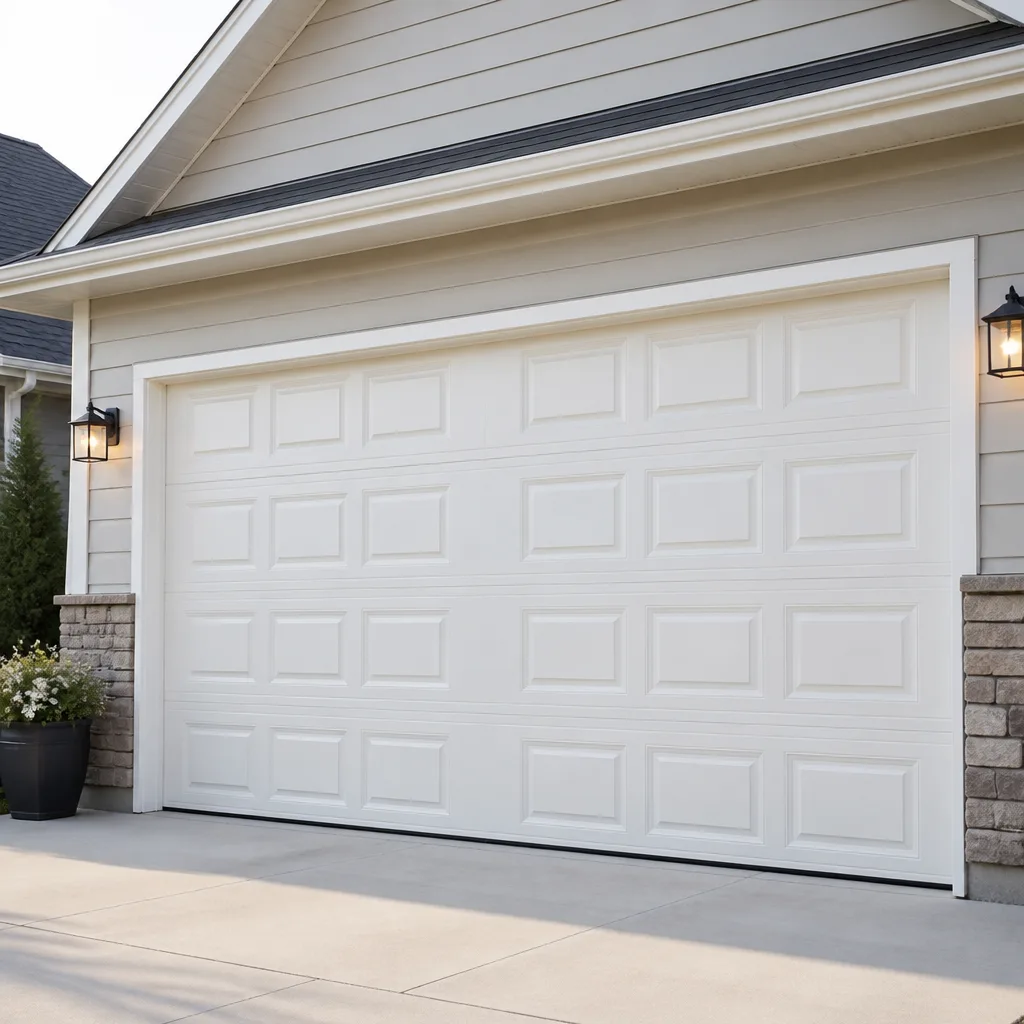 Raised-panel steel
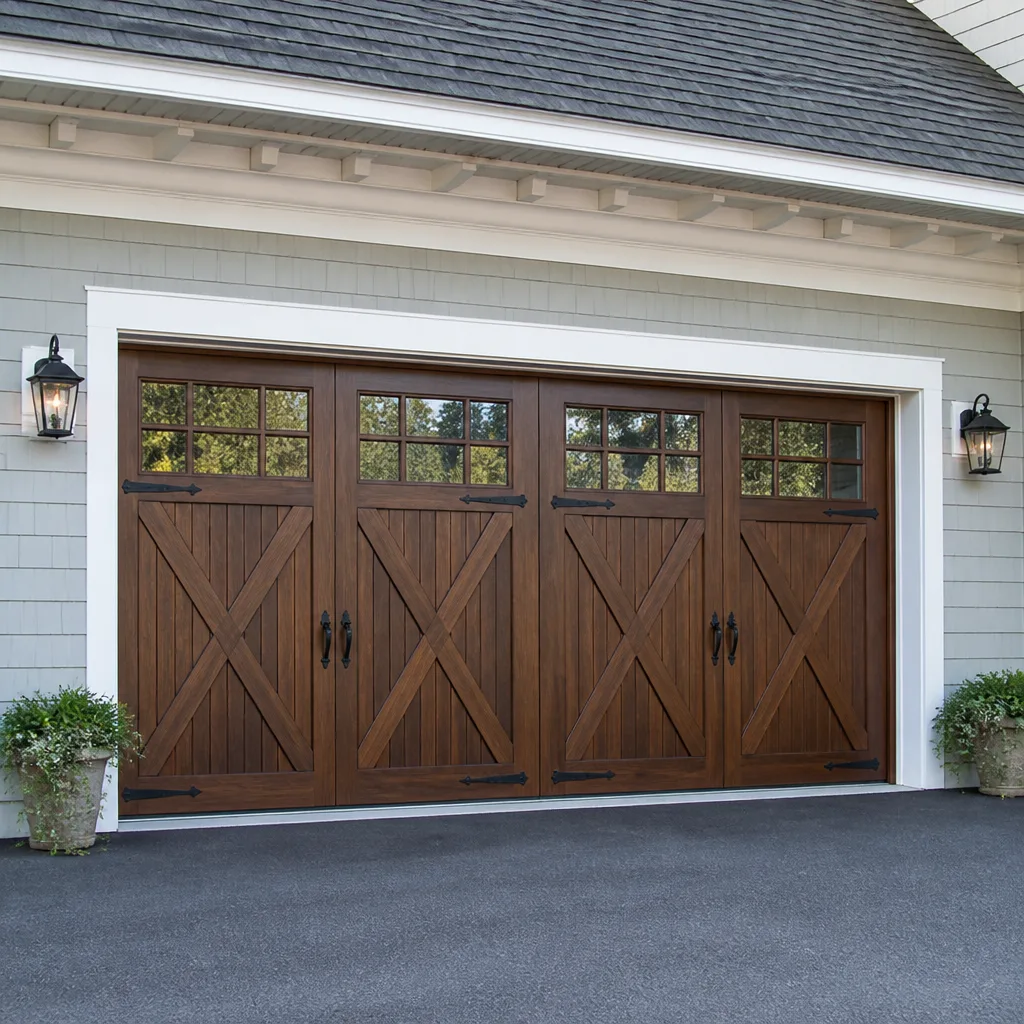 Carriage house
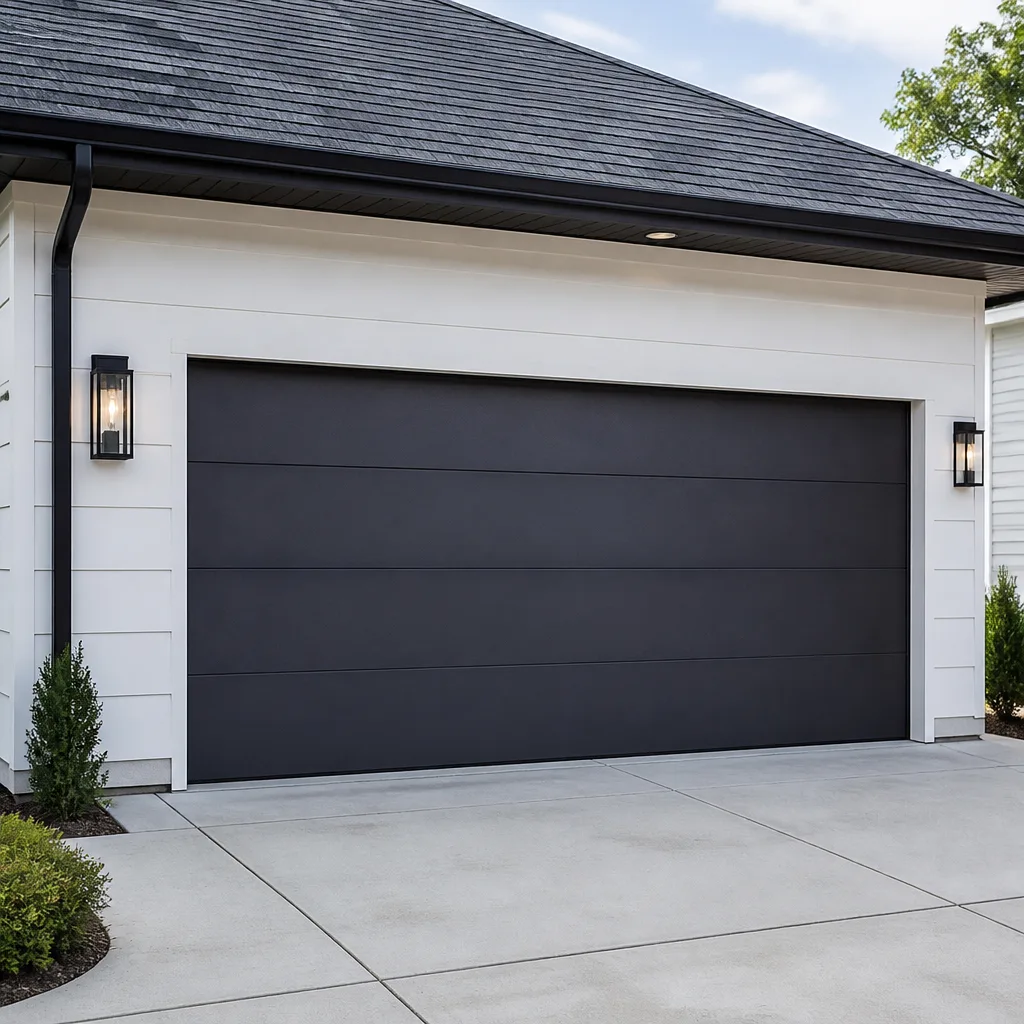 Modern flush
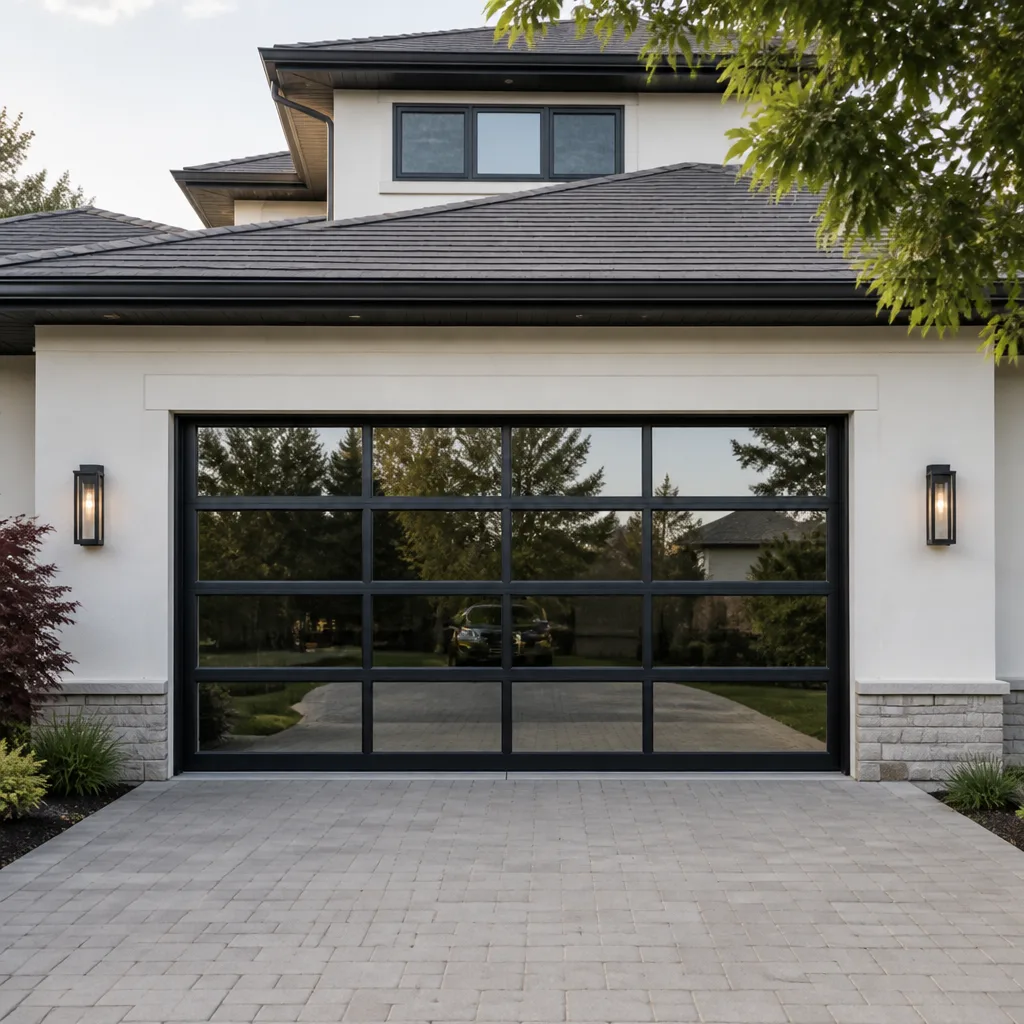 Full-view glass
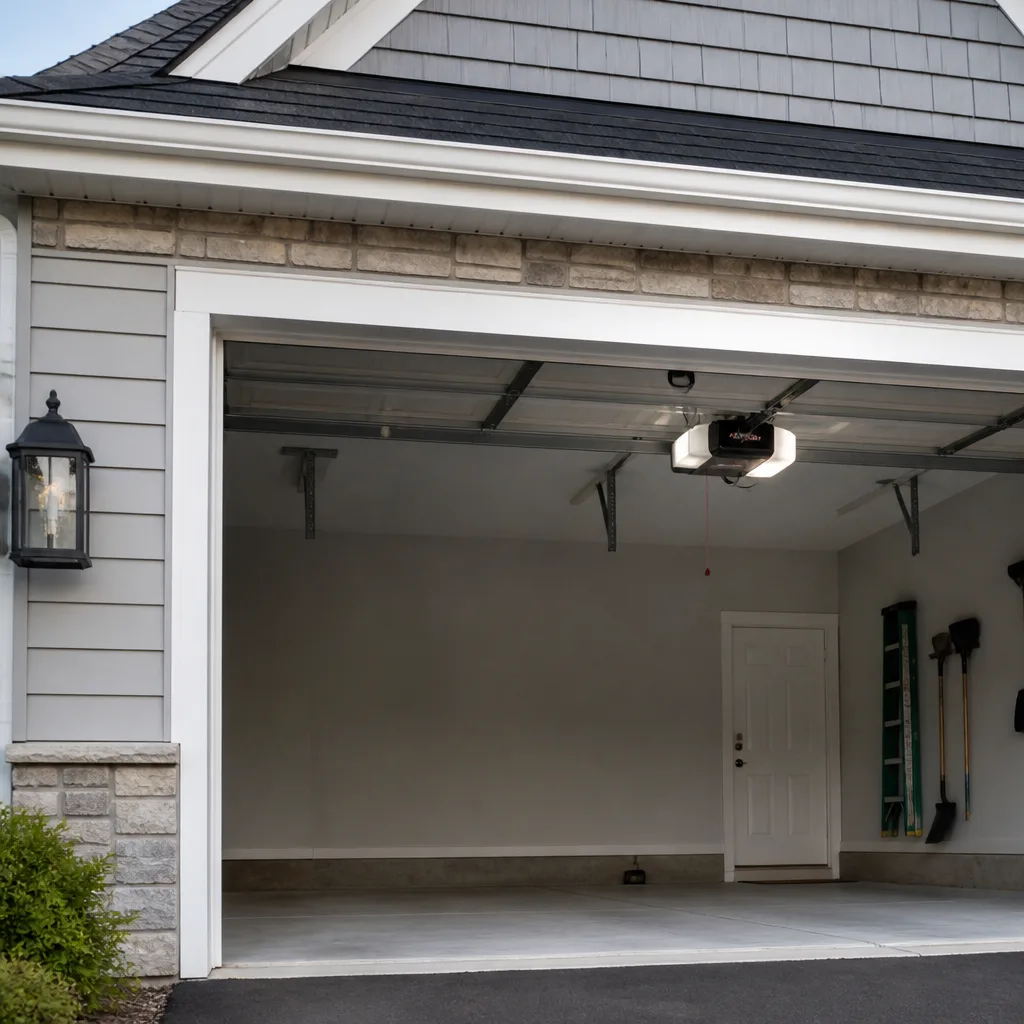 LiftMaster openers
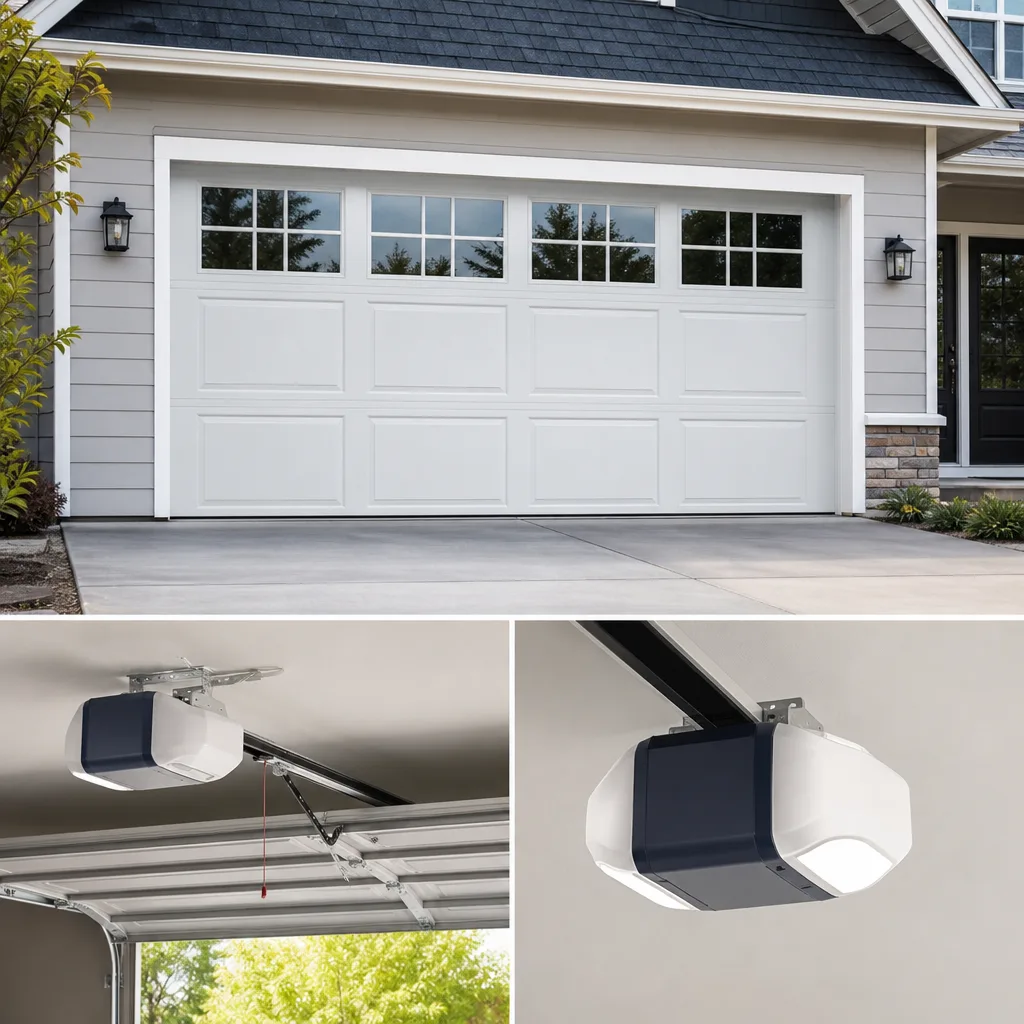 Chamberlain openers
Full 25-point door and opener safety check with every visit - springs, cables, rollers, tracks, and your LiftMaster or Chamberlain opener included
You get a price before we start. It does not change when the truck arrives.
Get your free estimateDIY vs Professional Garage Door: The Long Beach Homeowner’s Decision Guide
Torsion springs store enough mechanical energy to break bones and sever tendons in under a second, yet they remain the most searched garage door repair on YouTube, with tutorials that treat a 200-pound door like a bookshelf project. This guide gives you the straight answer on what’s safe to touch, what isn’t, what it actually costs either way (see our Garage Door Cost Breakdown: The Long Beach Homeowner’s Reference for 2026), and where California law draws the line. If you own a home in Long Beach, from Naples to Bixby Knolls, you’ll finish this page knowing exactly which jobs you can handle on a Saturday morning and which ones need a trained hand.
Styles & brands we work with
Quick Answer
Safe DIY garage door work in Long Beach includes lubrication, visual inspection, sensor realignment, and remote reprogramming. Anything involving torsion springs, lift cables, or track replacement falls on the professional side. The dividing line isn’t skill: it’s stored energy. Springs and cables under tension release that energy without warning, and a mistake costs more in hospital bills and door damage than the repair ever would have.
Table of Contents
- What You Can Do Yourself: The Safe DIY List
- What Requires a Professional: The Stored Energy Problem
- California Law and the Homeowner Exemption
- The Real Cost Comparison: DIY vs Professional
- Tool Rentals, Parts Sources, and Hidden DIY Costs
- How to Evaluate a Professional Quote in Long Beach
- Common Mistakes to Avoid
- When to Call a Professional
- Frequently Asked Questions
- The Bottom Line
What You Can Do Yourself: The Safe DIY List
Not every garage door problem needs a service call. We tell Long Beach homeowners this directly because it saves them money and builds trust: some tasks are genuinely safe, take under an hour, and require nothing more than a stepladder and common household supplies. Do these yourself with confidence.
1. Lubrication
Garage doors in Long Beach deal with salt air, and that corrosion works its way into rollers, hinges, and springs faster than inland neighborhoods. A door that groans or sticks usually needs lubrication, not repair. Use a silicone-based or white lithium spray on the hinges, rollers, and the torsion spring itself. Avoid WD-40: it displaces moisture but leaves little lasting film. Do this twice a year and you’ll extend the life of the whole system.
2. Visual Inspection
Stand inside the garage with the door closed and look at the lift cables, the two steel wires running along each side. Check for fraying, especially near the bottom bracket. Look at the spring: if it has a visible gap in the coil, it’s broken and needs replacement. Check the tracks for dents or rust. This inspection catches problems before they become breakdowns, and it requires zero tools.
3. Sensor Alignment
Most modern openers have photo-eye sensors mounted about six inches off the floor on each side of the door. If the door reverses immediately or refuses to close, the sensors are likely misaligned. Loosen the wing nut holding the sensor, adjust it until the small LED light glows steady, and retighten. This is a five-minute fix and the most common DIY success story in Long Beach homes.
4. Remote Reprogramming
A remote that stops working is almost never a broken opener. It’s a lost signal. Every opener brand has a simple reprogramming sequence: locate the “Learn” button on the motor unit, press it, then press the remote button within 30 seconds. This works for Chamberlain, LiftMaster, Genie, and most other major brands. The owner’s manual has the exact steps, and no tools are required.
5. Weatherstripping Replacement
The rubber strip along the bottom of the door wears out every few years, and in Long Beach’s coastal climate, it degrades faster. A worn seal lets in water, leaves, and the occasional lizard. Replacement strips cost under $25 at any hardware store, slide into the channel on the bottom of the door, and need nothing more than scissors to trim to length.
What Requires a Professional: The Stored Energy Problem
Now the part most YouTube tutorials won’t tell you. Some garage door components store enough mechanical energy to cause permanent injury, and no amount of careful watching replaces the training and specialized tools professionals use. Here’s the mechanical reality, explained plainly.
Torsion Springs: The Numbers
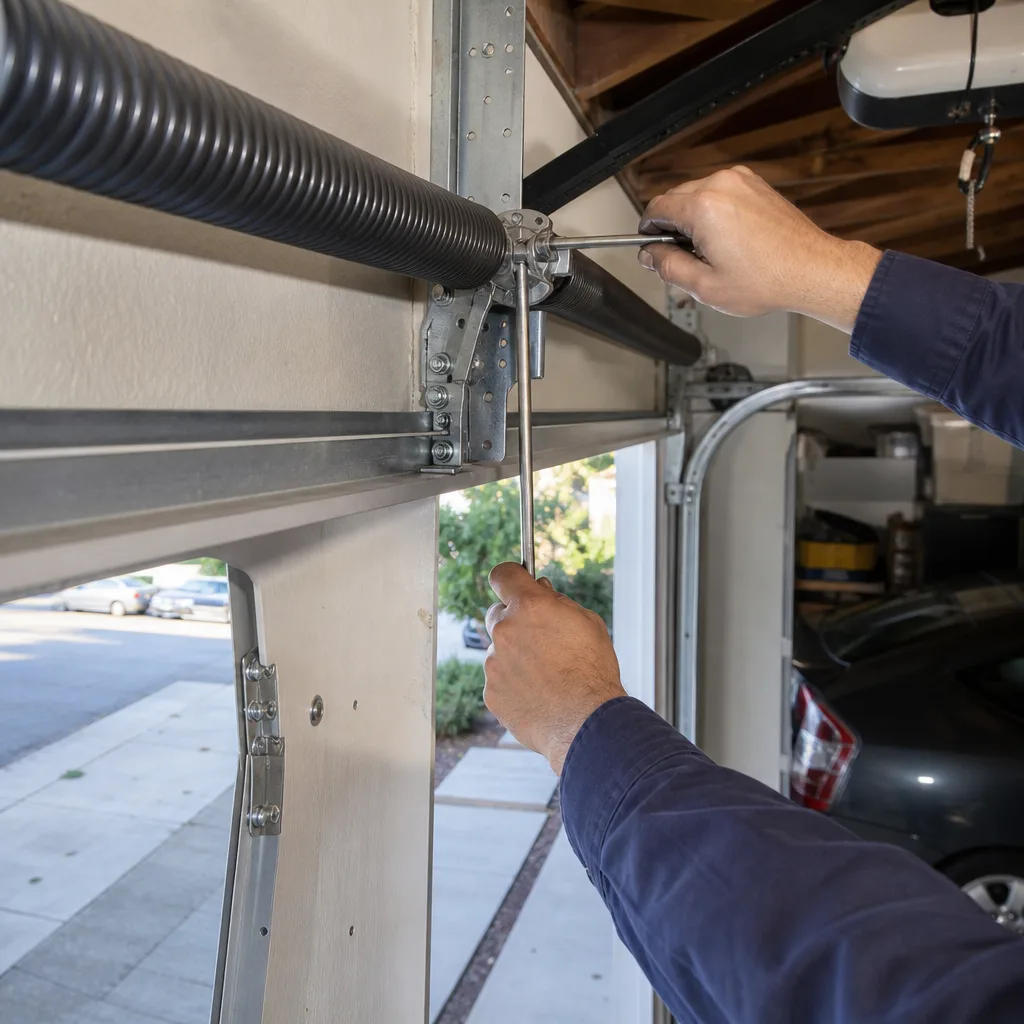
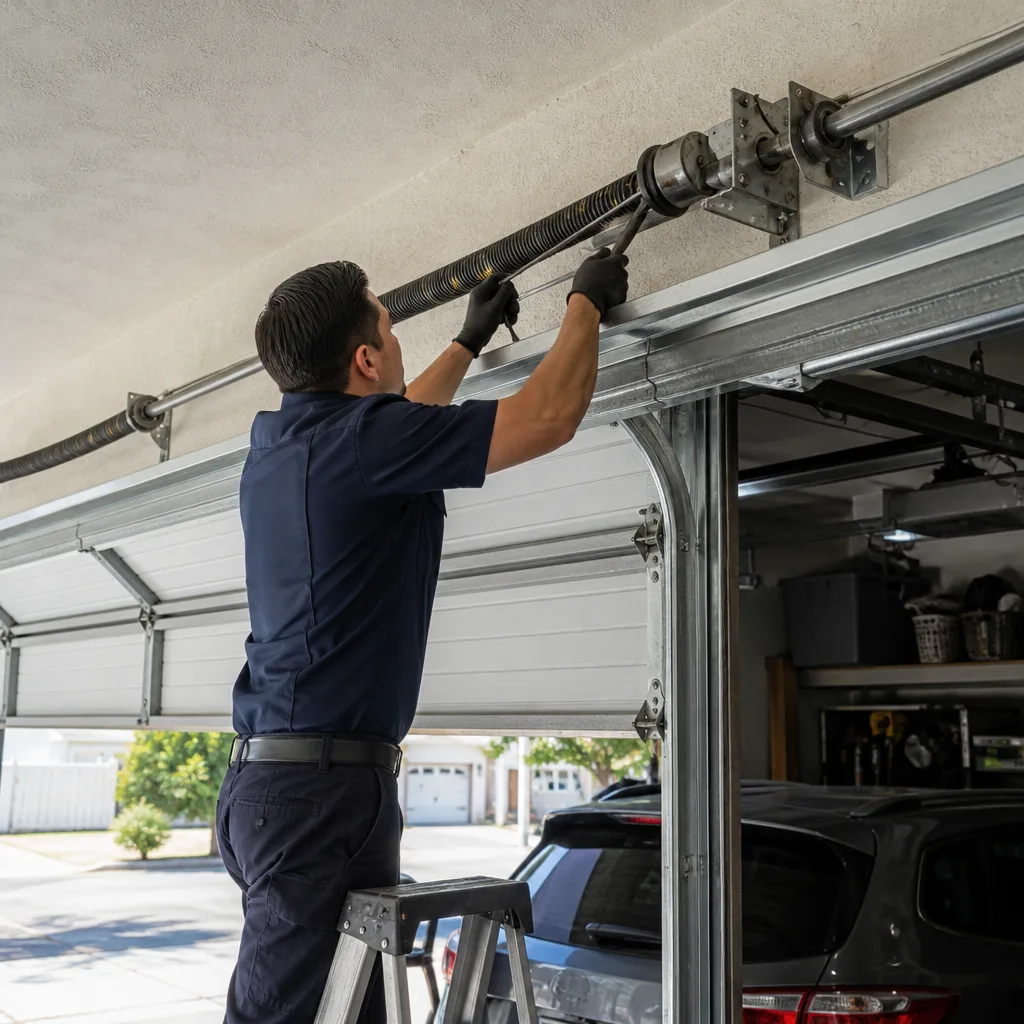
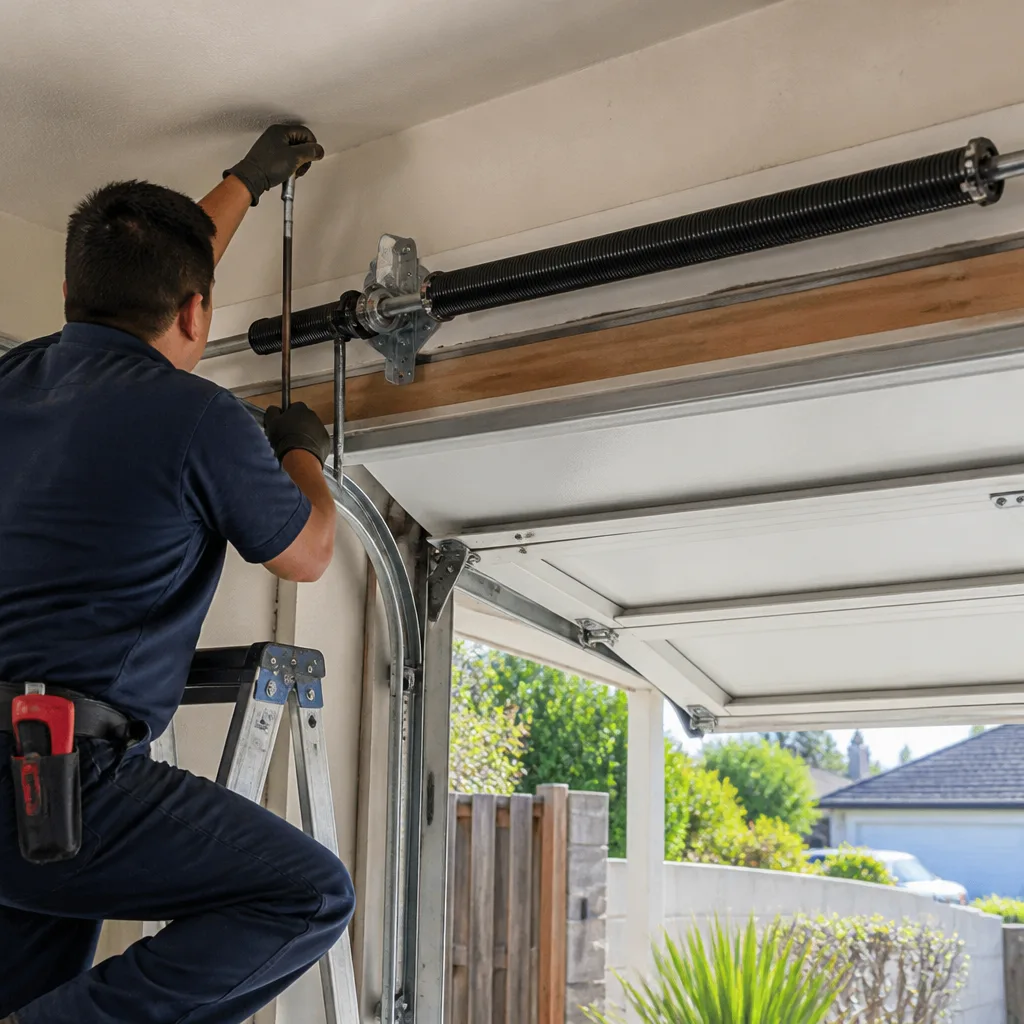
A residential torsion spring, the thick coiled spring mounted on a steel shaft above the door, balances a door that weighs between 150 and 250 pounds. The spring stores that energy in tension. A standard two-car door spring under full wind holds roughly 750 to 1,000 pounds of torque. When the spring fails, that energy releases in a fraction of a second. The winding cone and the steel bars used to adjust it become projectiles. Hand injuries from spring work don’t happen because people are careless; they happen because the energy involved exceeds what a human body can react to. By the time you feel the bar slip, the damage is already done.
Lift Cables: The Silent Hazard
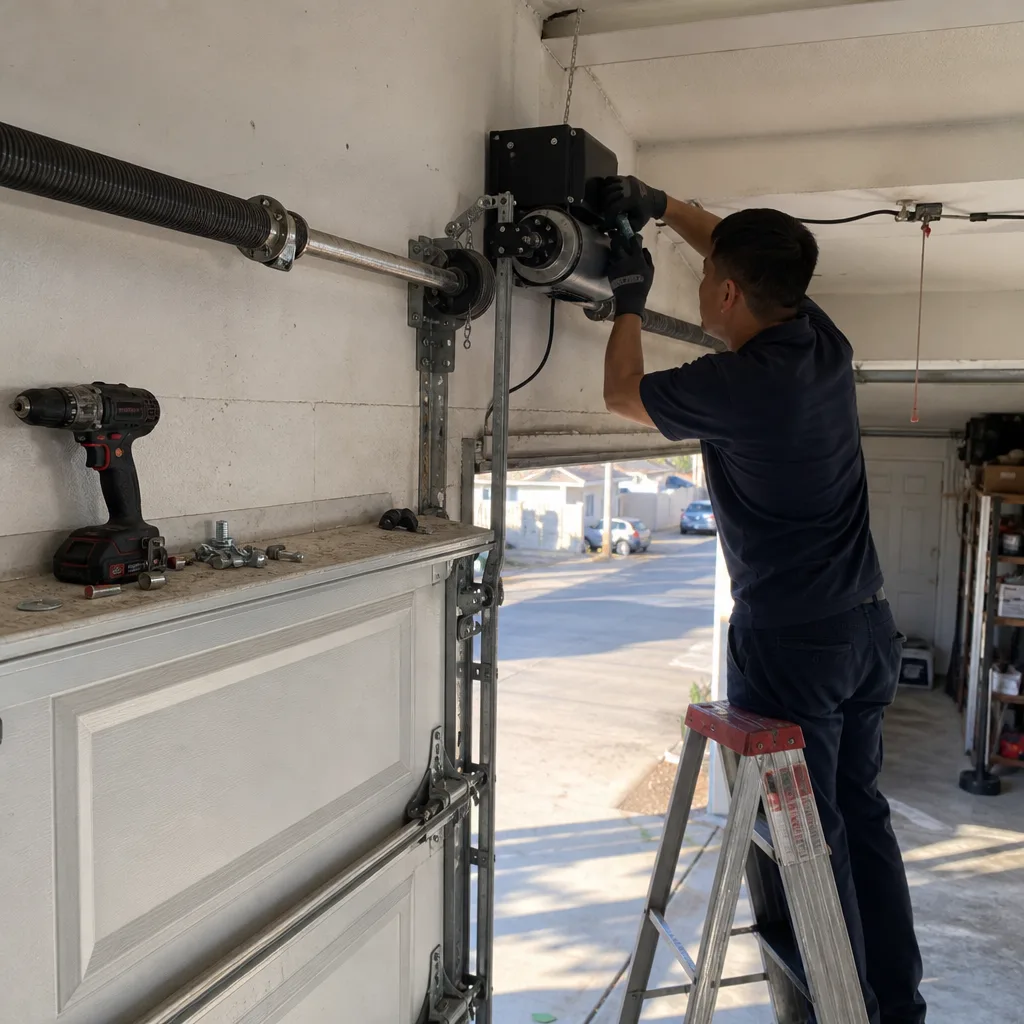
Lift cables work as a pair, each bearing half the door’s weight as it moves. When one cable snaps, the remaining cable takes the full load, and the door drops on that side. What looks like a simple cable replacement actually requires releasing tension from the spring system, reinstalling the cable on the drum, and rebalancing the entire door. Get any step wrong and the door comes down hard. In our experience, cable work accounts for the highest number of “I tried it myself and now it’s worse” calls we get in Long Beach.
Track and Roller Replacement
Tracks guide the door through its entire travel path, and when they’re bent or misaligned, the door can derail. Removing and reinstalling track sections requires realigning the entire system, and if the door comes off the track while you’re working on it, it becomes dead weight. This is not a job for a stepladder and a socket wrench.
Opener Replacement with Spring Integration
A new opener works with the existing spring system. If the spring isn’t properly balanced, the opener motor strains against the door’s weight every cycle, burning out the motor prematurely. Professionals install openers with a torque-check on the spring system, so the two components work as a matched pair. You can buy a Chamberlain opener at the hardware store, but if the spring underneath it is wrong, you’ll replace the opener again in two years.
For these jobs, hire someone trained. Garage Door Repair in Long Beach covers spring replacement, cable work, track realignment, and opener installation. The question isn’t whether a homeowner can learn to do it: it’s whether the risk-adjusted cost makes any sense. It doesn’t.
California Law and the Homeowner Exemption
California’s contractor licensing law sets a clear line: anyone performing work on someone else’s property for pay must hold a state contractor’s license issued by the Contractors State License Board. That’s straightforward. The question homeowners ask us is whether they can legally work on their own garage door. The answer is yes, with important caveats.
California Business and Professions Code Section 7048 exempts a property owner from the licensing requirement when performing work on their own residence, provided the work is not intended for sale or lease. You can legally replace your own torsion springs, install your own opener, and rehang your own door. No permit is required for most garage door repair or replacement work on an existing single-family home in Long Beach, though you can read more in our Garage Door Permits, Codes & Inspections in CA: What You Need to Know. What triggers permit review is structural modification: changing the door opening size, installing a new header, or converting a carport to a garage. Routine component replacement, no permit, no license required for the owner-occupant.
Here’s what the exemption doesn’t do: it doesn’t protect you from injury. It doesn’t cover your neighbor’s door if you offer to help for a case of beer and that becomes a “job.” And it doesn’t shield you from liability if unpermitted structural work later fails. The legal right to do something and the practical wisdom of doing it are separate questions. You can legally replace your own torsion spring in Long Beach. That doesn’t make it a good idea. Also note: when you hire someone, the state requires they carry a license and that the work be performed by a licensed contractor or their registered employee. If a handyman quotes you $80 for spring replacement, that’s an unlicensed contractor breaking state law, and you’ll have no recourse if the spring fails and the door comes down on your car.
The Real Cost Comparison: DIY vs Professional
The DIY argument usually starts with a price. A pair of torsion springs costs $60 to $120 online. A professional spring replacement in Long Beach runs $250 to $450, installed. On paper, you’re saving $200 to $350. Here’s what that paper doesn’t show.
DIY Spring Replacement: The Full Ledger
- Springs: $60 to $120 for a matched set. Getting the wrong wire size or wrong winding direction means the door won’t balance and the springs fail early.
- Winding bars: $30 to $50 for properly hardened steel bars. Common rebar is not a substitute; it bends under spring tension and becomes a missile.
- Time: A professional does this job in 45 to 90 minutes. A first-time DIY takes four to six hours, including trips to the hardware store for the wrong-size bars.
- The mistake tax: If the door slams down after a spring failure during your attempt, you’ll likely bend a track, crack a panel, or destroy the opener carriage. That’s $300 to $800 in parts alone, not counting the emergency service call to fix what you now cannot fix yourself.
Professional Flat-Rate in Long Beach
What you’re paying for with a professional isn’t just labor: it’s the matched spring set, the correct tensioning for the specific door weight, a balance test, and a warranty that covers the work. Most cable repairs run $150 to $275, depending on cable type and drum condition. Opener replacement runs $350 to $600 installed, depending on the motor unit and whether you need a new rail or belt assembly. Full door replacement from a manufacturer like Amarr or Wayne Dalton starts around $1,200 for a basic steel door and climbs based on insulation, window inserts, and material.
The honest comparison looks like this: DIY saves you money only when nothing goes wrong. When the job is simple, nothing goes wrong and you should absolutely do it yourself. When the job involves springs or cables, the downside risk exceeds the upside savings. That’s the whole decision in one sentence.
Tool Rentals, Parts Sources, and Hidden DIY Costs
If you’re still weighing the DIY route for a spring job, let’s talk about what’s actually involved in tooling up. It’s more than a trip to Home Depot.
What a Spring Job Actually Requires
- Hardened winding bars: These are not sockets, not screwdrivers, not rebar. They’re solid steel rods, typically 18 inches long and 1/2 inch in diameter, made from a grade of steel that resists bending under torque. Improvised substitutes deform and slip under load.
- A complete spring set matched to your door: Torsion springs are specific: wire diameter, coil inside diameter, length, and winding direction all matter. A spring that’s one wire size off either won’t lift the door or will lift it violently. Most online guides gloss over this; door manufacturers don’t.
- A torque reference chart: Professionals count quarter-turns against the door’s weight and height. Guesswork produces springs that are either over-tightened (premature failure) or under-tightened (door drops when the opener releases).
- Patience and clean access: The torsion shaft sits directly above the closed door. Working space is tight, the spring is at face level, and the bars have to be inserted and removed at full tension. This is not a comfortable or forgiving working position.
Where Long Beach DIYers Get Parts
Local options include Home Depot on Cherry Avenue, Lowe’s on Los Coyotes Diagonal, and online suppliers that ship springs in two days. The problem with local retail: they stock a limited range of springs, and the wire size you need is often a special order. Online suppliers are cheaper but slower, and returns on a wrong-size spring are a pain. Professionals carry dozens of spring configurations on the truck, which is why the job takes under two hours instead of two days.
How to Evaluate a Professional Quote in Long Beach
Choosing professional work doesn’t mean writing a blank check. The same discipline you’d apply to any home improvement purchase applies here, and a little knowledge keeps you from overpaying or hiring the wrong shop.
What a Fair Quote Includes
- Line-item parts and labor: You should see the spring cost, the labor charge, and any service call fee listed separately. A one-line “total” that doesn’t break anything down is a red flag.
- A written price before work starts: Not a verbal estimate, not a “we’ll see when we get in there.” The number you approve should be the number on the invoice. The written price is handed over before any work starts, so the number on the invoice matches the number you approved, every time.
- A warranty in writing: Any reputable shop stands behind its work. At Brock Garage Doors Long Beach, your repair is covered in writing for 365 days. If it fails in that window, we return at no charge.
- Brand familiarity: A technician should recognize your door and opener manufacturer by sight. We train on LiftMaster, Chamberlain, Genie, Clopay, Amarr, Wayne Dalton, Craftsman, and Raynor. If the tech squints at the brand name on the motor, you called the wrong company.
Red Flags in Garage Door Quotes
- The “full replacement” upsell on a repairable door: A 10-year-old door with a broken spring doesn’t need a new door. It needs a spring. If the quote pushes replacement without a specific reason, get a second opinion.
- The unstated trip charge: Some companies quote a low labor rate then add a $75 dispatch fee, a $40 “shop supply” fee, and a $25 “environmental” fee. Ask directly: what is the total out-the-door price?
- The cash-only discount: A licensed contractor working legally doesn’t need to hide from payment records. Cash-only offers often come from unlicensed operators, and you have no recourse if the work fails.
- Pressure to sign today: A legitimate quote holds for at least 30 days. Anyone telling you the price expires at midnight is creating urgency, not value.
If you want a reference point, Garage Door Cable Repair in Long Beach gives you our honest take on what cable jobs should cost, and Garage Door Opener Repair in Long Beach breaks down opener pricing. An informed homeowner is harder to overcharge, and that’s good for the entire trade.
Common Mistakes to Avoid
- Attempting torsion spring work with improvised tools. Winding bars exist for a reason. Rebar, screwdrivers, and pry bars bend under load and slip, turning a controlled release into an uncontrolled one. The hospital bill from a spring accident makes any tool savings irrelevant.
- Replacing one spring when both need it. Torsion springs wear as a pair. If one breaks, the other is at the end of its life, and replacing only the broken one leaves an unbalanced door and a future second service call in Long Beach’s salty air, which accelerates spring corrosion.
- Lubricating with the wrong product. WD-40 is a solvent that strips existing lubrication. Use white lithium or silicone spray on moving parts. Using the wrong product means redoing the job and, in a coastal climate, accelerates rust on exposed metal.
- Ignoring the safety cable inside extension springs. Older Long Beach homes, especially in neighborhoods like Cal Heights and Los Altos, often have extension springs (the kind that stretch along the horizontal track). If a safety cable isn’t present and the spring breaks, the spring becomes shrapnel. This is a professional fix, not a YouTube project.
- Assuming a new opener fixes a broken spring. The opener moves the door; the spring lifts the weight. If the spring is broken, a new opener will strain and burn out, and you’ll pay twice. We see this in Long Beach more often than any other DIY mistake: an opener replaced for $400 when the actual problem was a $200 spring.
- Forgetting to photograph the setup before disassembly. If you do tackle a non-spring repair and get stuck, having photos of the original configuration is the difference between a quick reassembly and a “now what” moment at 9 PM. Even simple DIY jobs benefit from documentation.
When to Call a Professional
Call a professional when the door won’t open and your car is inside, when a spring has snapped and the door is on the ground, when a cable is frayed or has come off the drum, when the door sags on one side, or when you hear grinding, popping, or loud bangs during operation. These are not maintenance issues; they’re structural failures. A broken spring isn’t an inconvenience, it’s a security risk: the door is now heavy enough to injure someone and light enough for one person to lift from outside. In any of these situations, call Brock Garage Doors Long Beach home. Our technicians arrive in uniform, have passed background checks, and work to The Garrison Standard: show up in the window, price in writing, do it by the book, leave it clean, stand behind it for a year. Brock Garage Doors Long Beach offers free estimates in Long Beach, call (562) 337-3993.
Frequently Asked Questions
Professional torsion spring replacement in Long Beach typically runs $250 to $450, including the matched spring set, installation, tensioning, and a balance test. The price varies with door weight and spring type. Call (562) 337-3993 for an exact quote, estimates are free.
Yes, California’s homeowner exemption allows you to perform work on your own single-family residence without a contractor’s license, provided the home is not for sale or lease. The exemption doesn’t cover structural changes that require a permit, and it doesn’t remove the physical risk of spring or cable work.
A torsion spring under full tension stores enough force to cause permanent hand injury, severe facial trauma, or death if the winding bar slips or the spring releases. The energy release happens faster than human reaction time. This is not dramatic language; it’s mechanical reality.
Safe DIY tasks include lubricating hinges and rollers with white lithium spray, realigning photo-eye sensors, reprogramming openers, replacing bottom weatherstripping, and visually inspecting cables and springs for wear. Any repair involving spring tension, lift cables, or track realignment belongs with a professional.
Standard torsion springs are rated for 10,000 cycles, which translates to 7 to 12 years for most Long Beach homeowners. Coastal salt air can reduce that lifespan, especially on homes within a mile of the water, where we see spring failures at the 5-to-7-year mark.
Not with a reputable company. The written price you approve before work starts is the price you pay, unless additional work is discovered and you approve a new written quote for it. The written price is handed over before any work starts, so the number on the invoice matches the number you approved, every time. Call (562) 337-3993 to talk through your specific door.
The Bottom Line
The DIY-versus-pro question has a clean answer: do the maintenance yourself (our Garage Door Repair Maintenance Checklist for Long Beach Homeowners can help), hire out the repairs. Lubrication, sensor realignment, remote programming, and weatherstripping are safe, satisfying weekend wins that any Long Beach homeowner can handle. Torsion springs, lift cables, and track work store too much energy and require too much specialized knowledge for the risk to make sense. California law gives you the right to try, but the law doesn’t reset the physics. When a spring breaks or a cable snaps, call a professional with a written warranty and a written price. That’s the difference between a door that works for another decade and a project you regret starting.
Written by Wade Mercer, Owner at Brock Garage Doors Long Beach, serving Long Beach since 2001.
See the difference
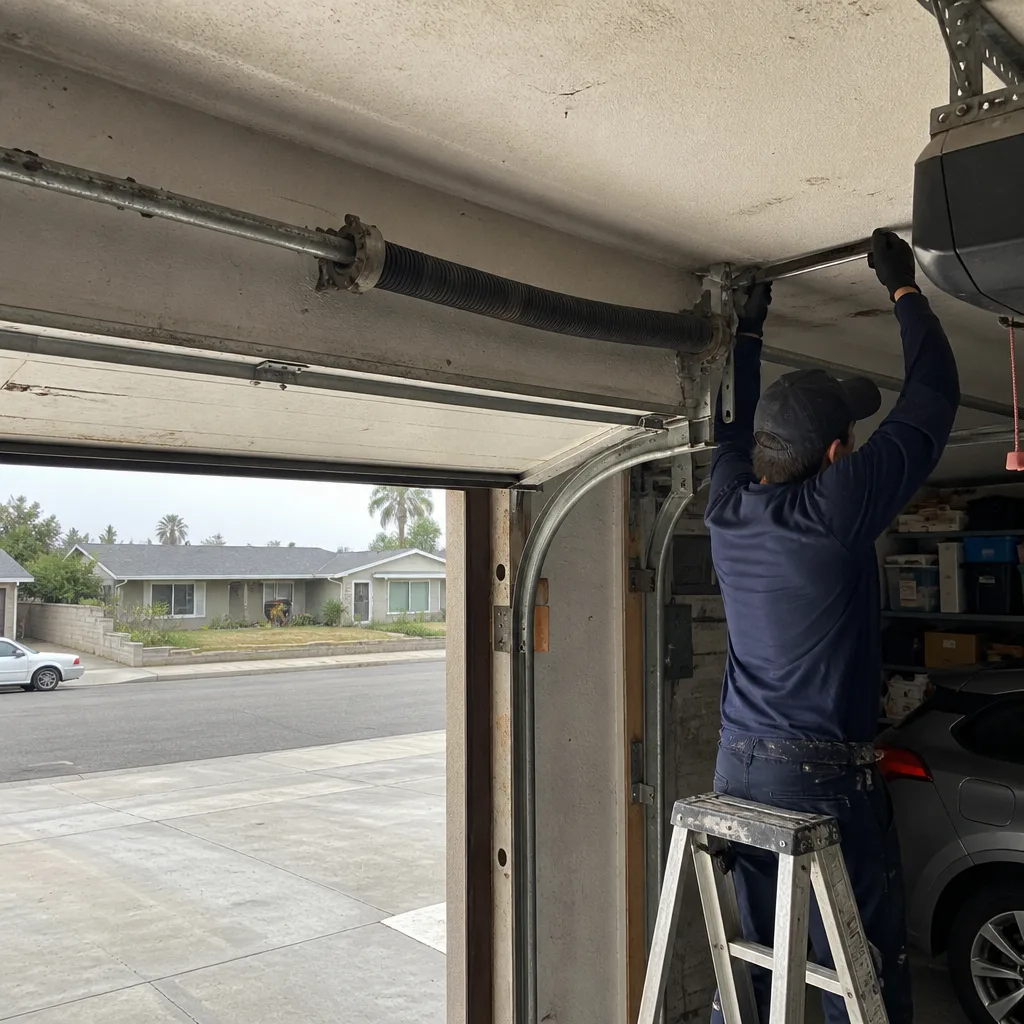 Before
 After
After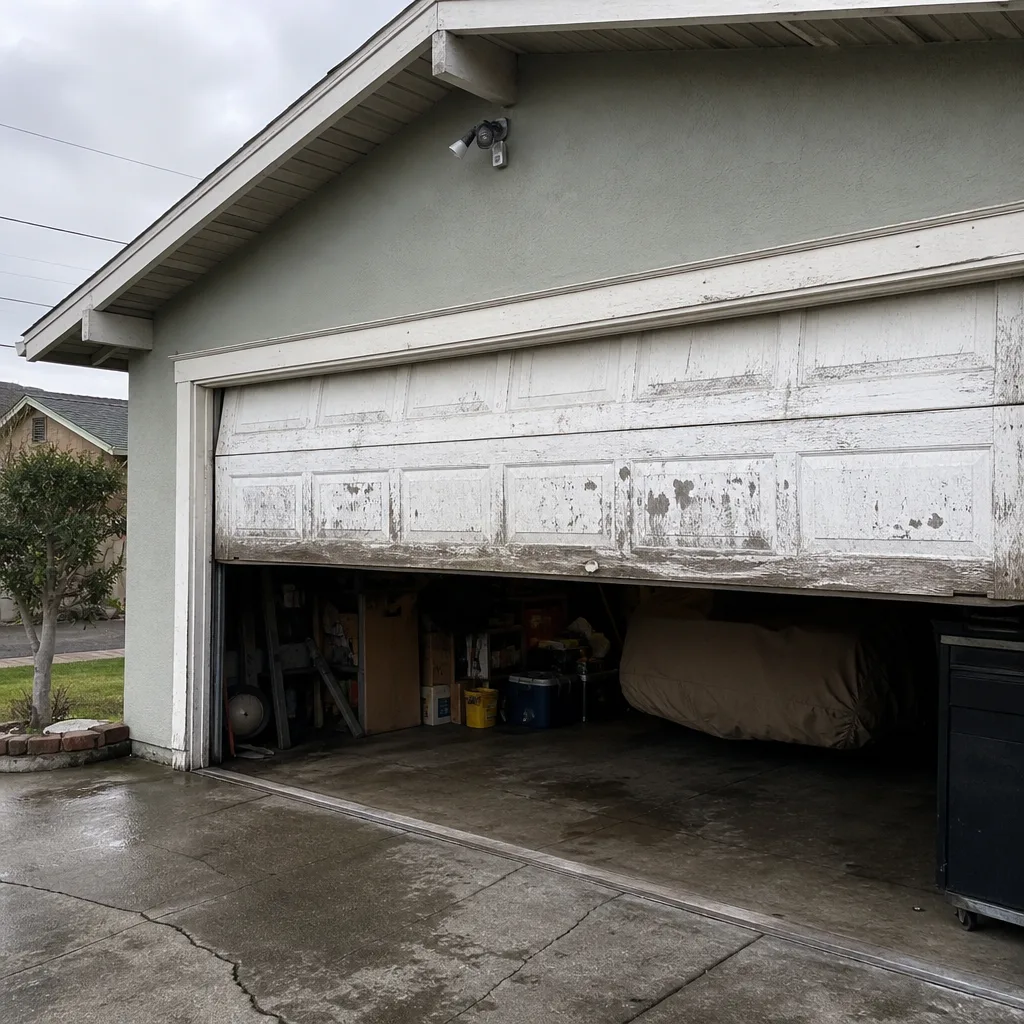 Before
 After
After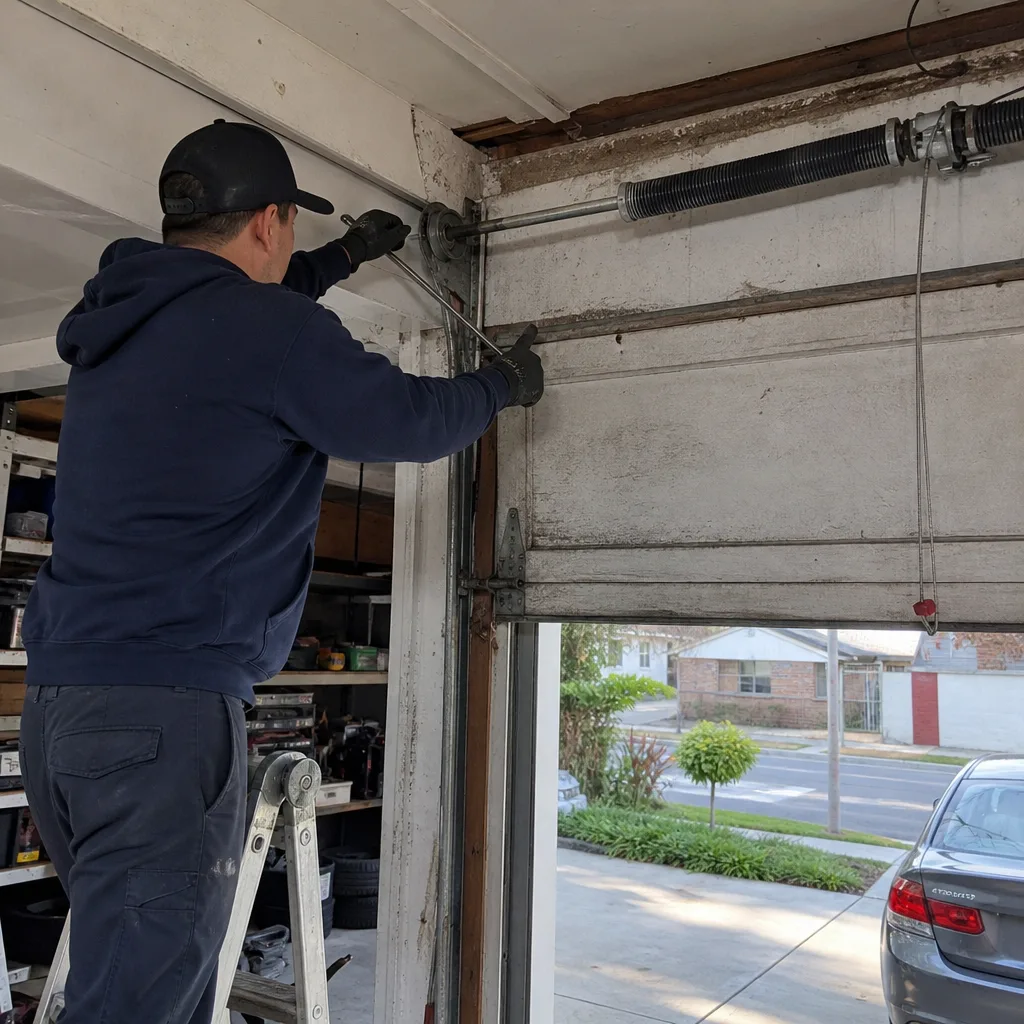 Before
 After
After