
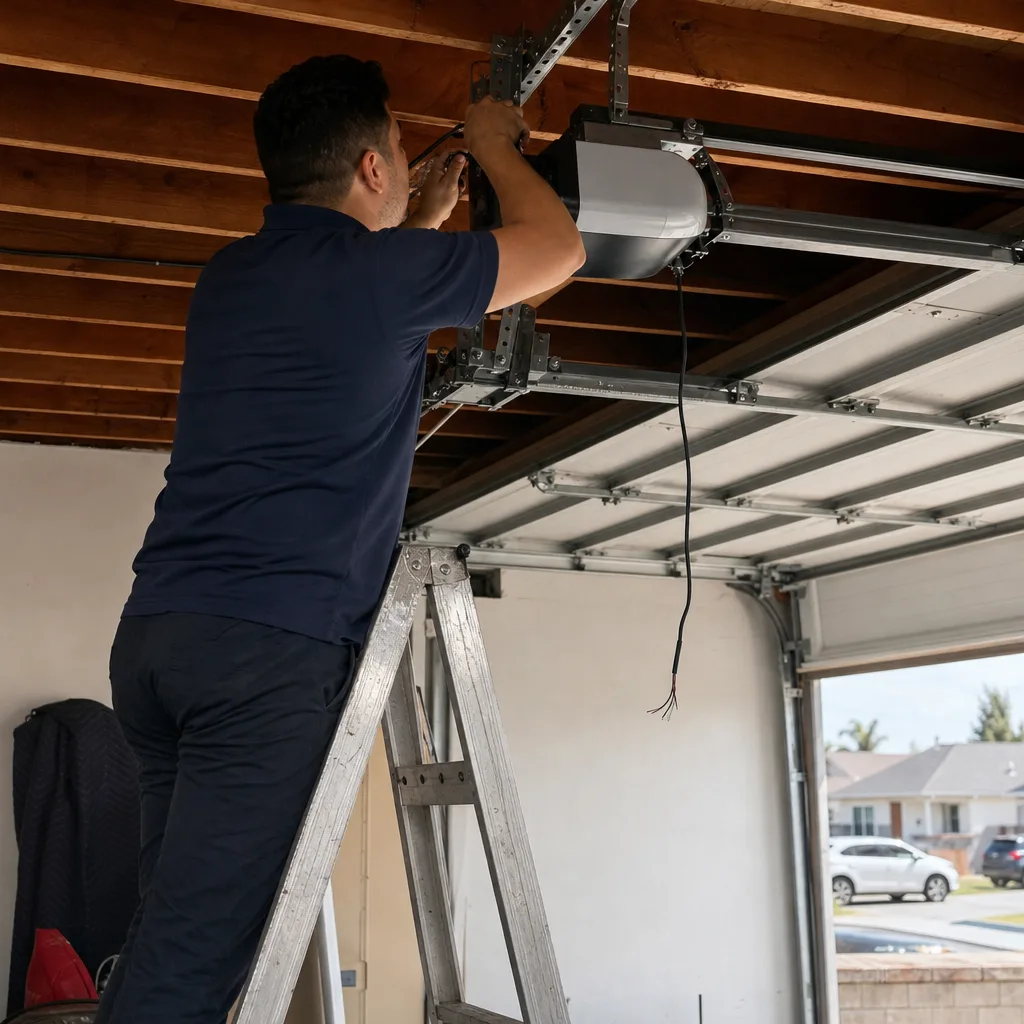
Last updated October 16, 2026
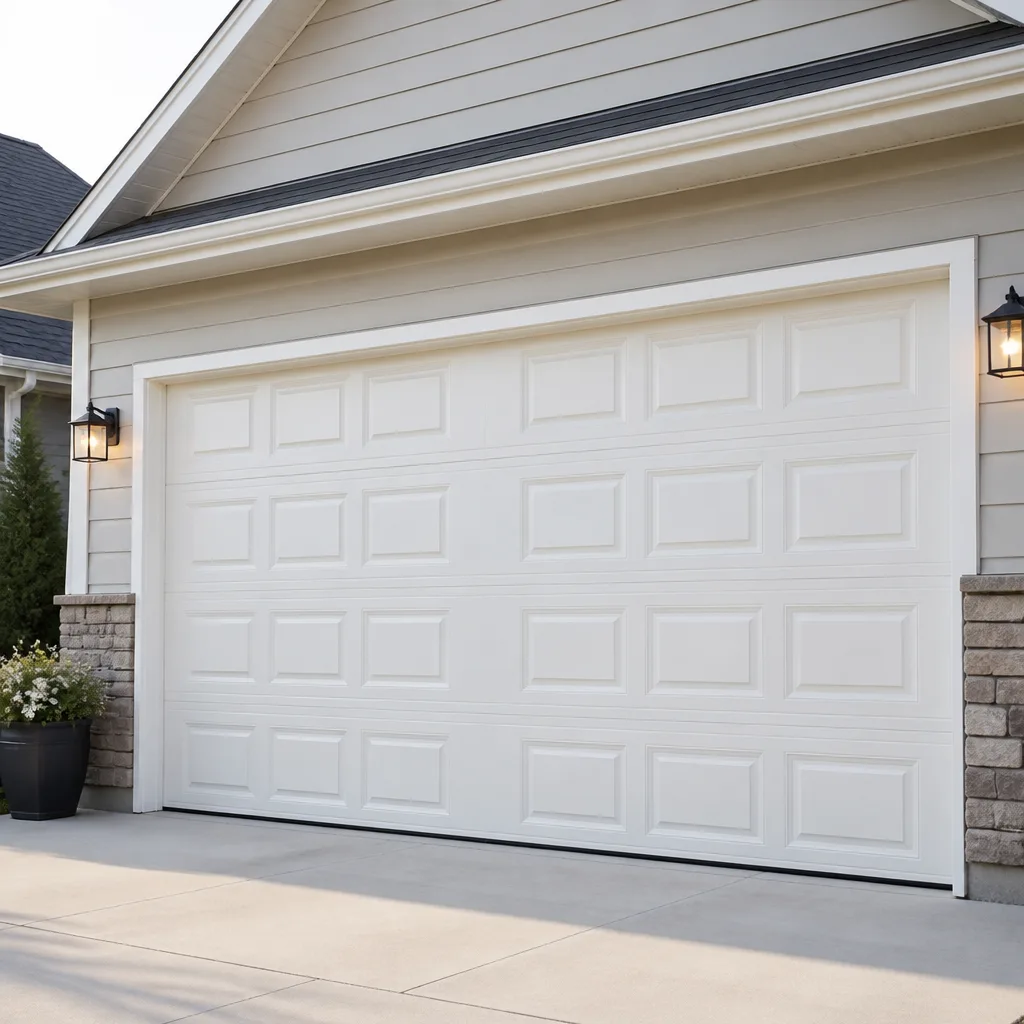 Raised-panel steel
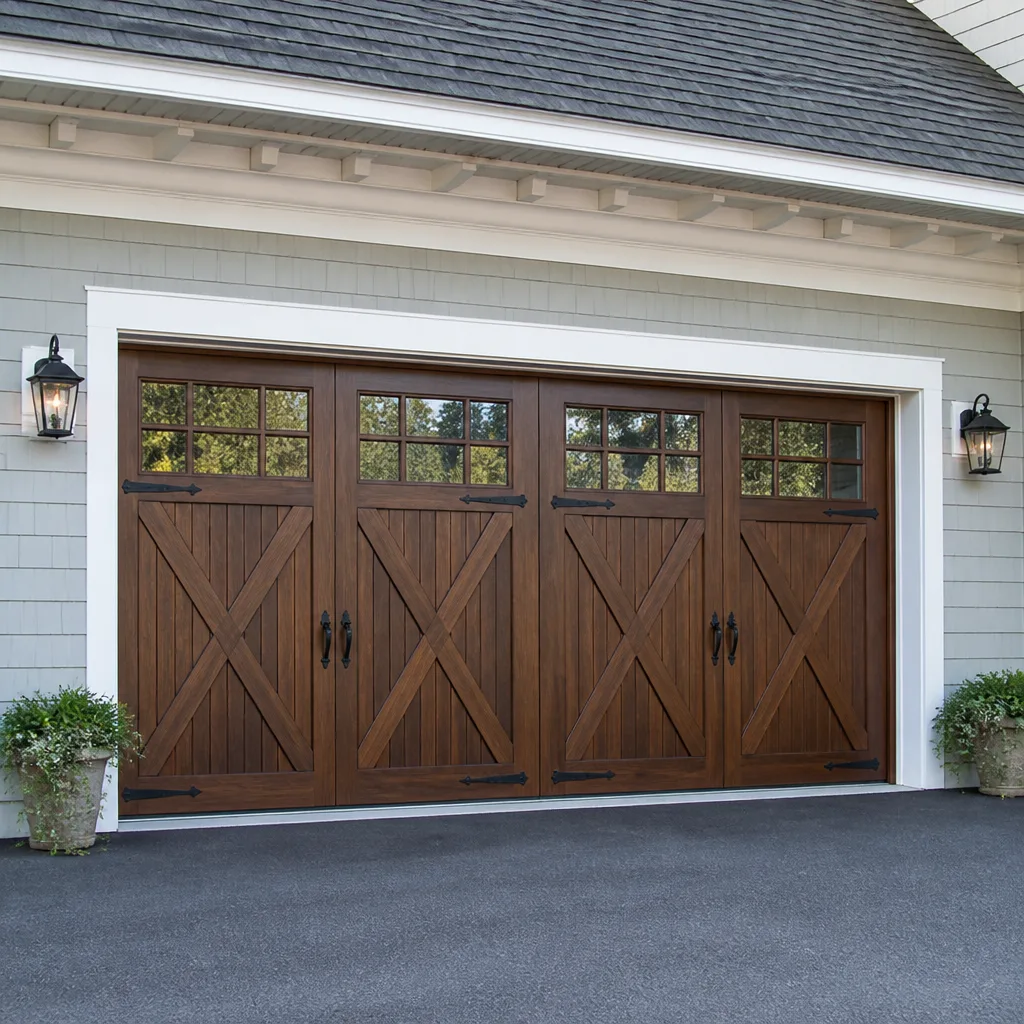 Carriage house
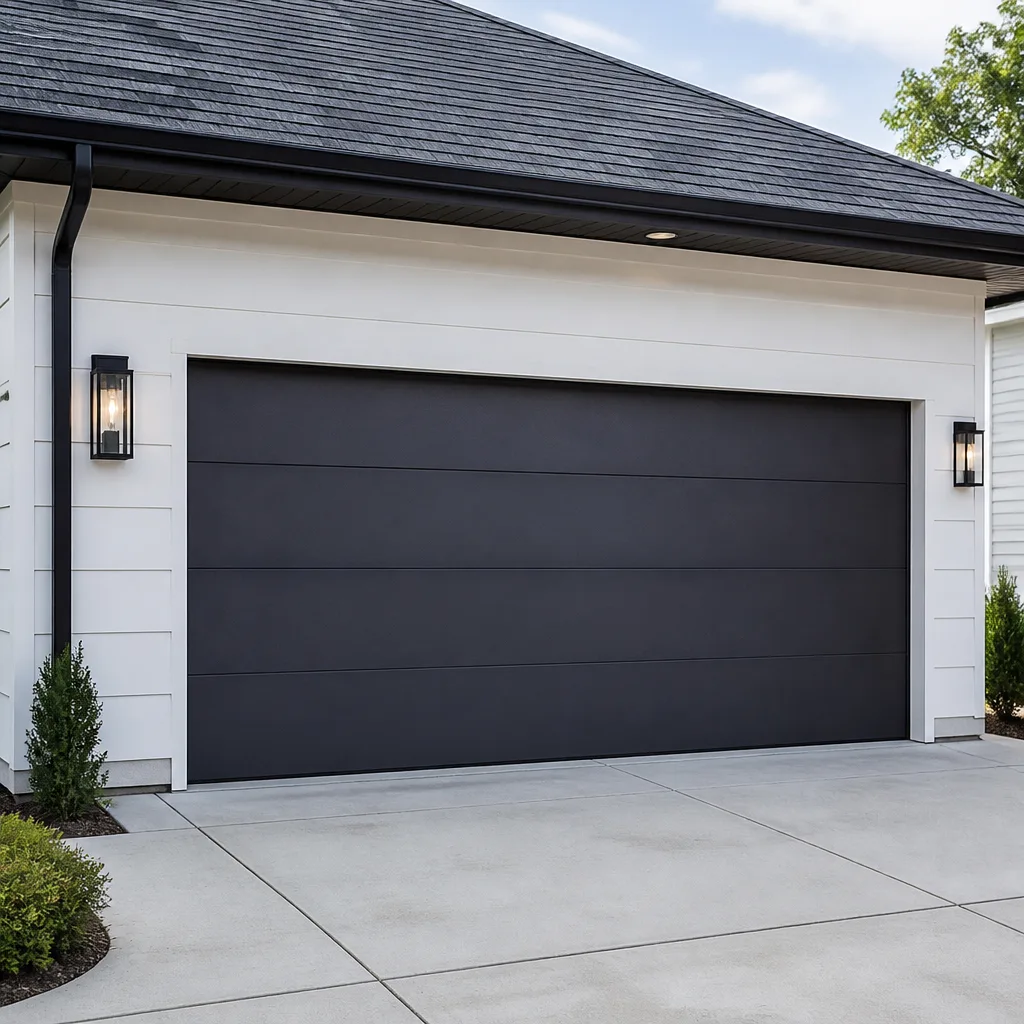 Modern flush
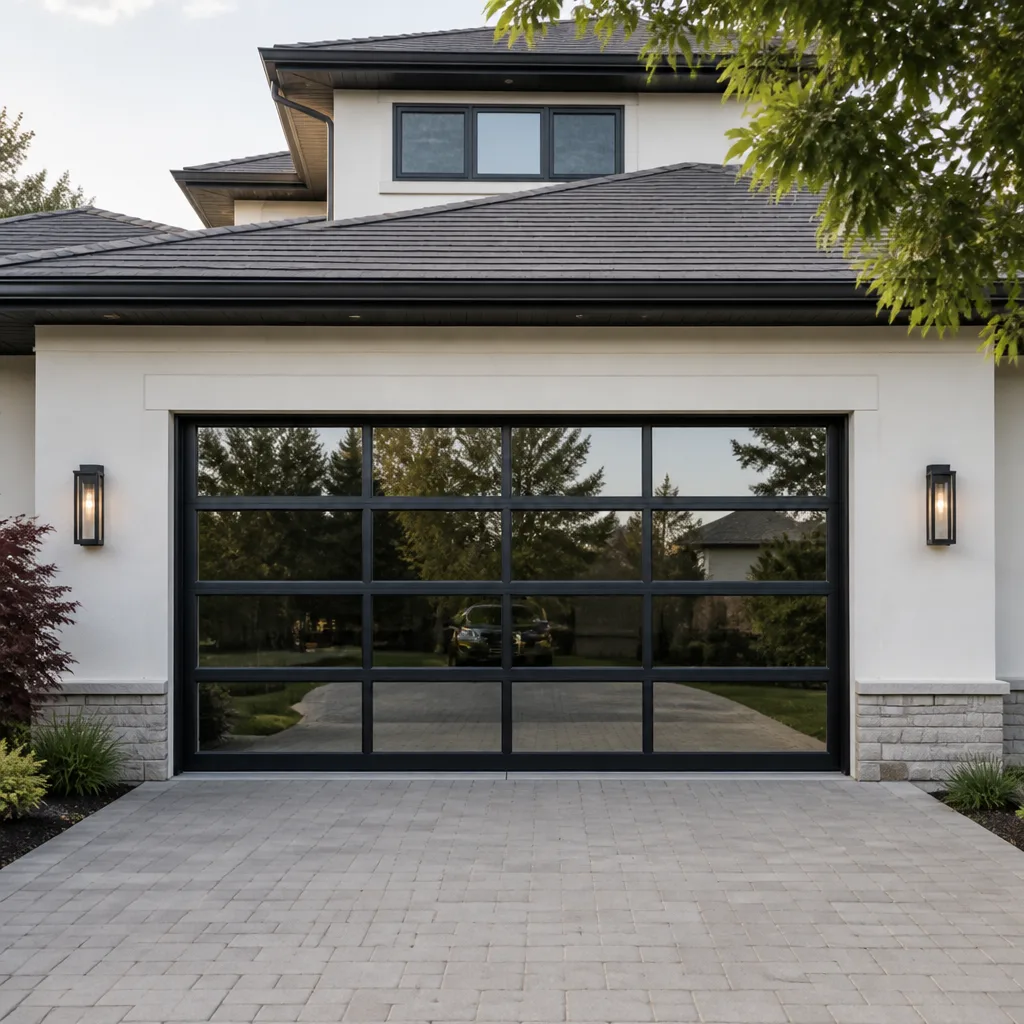 Full-view glass
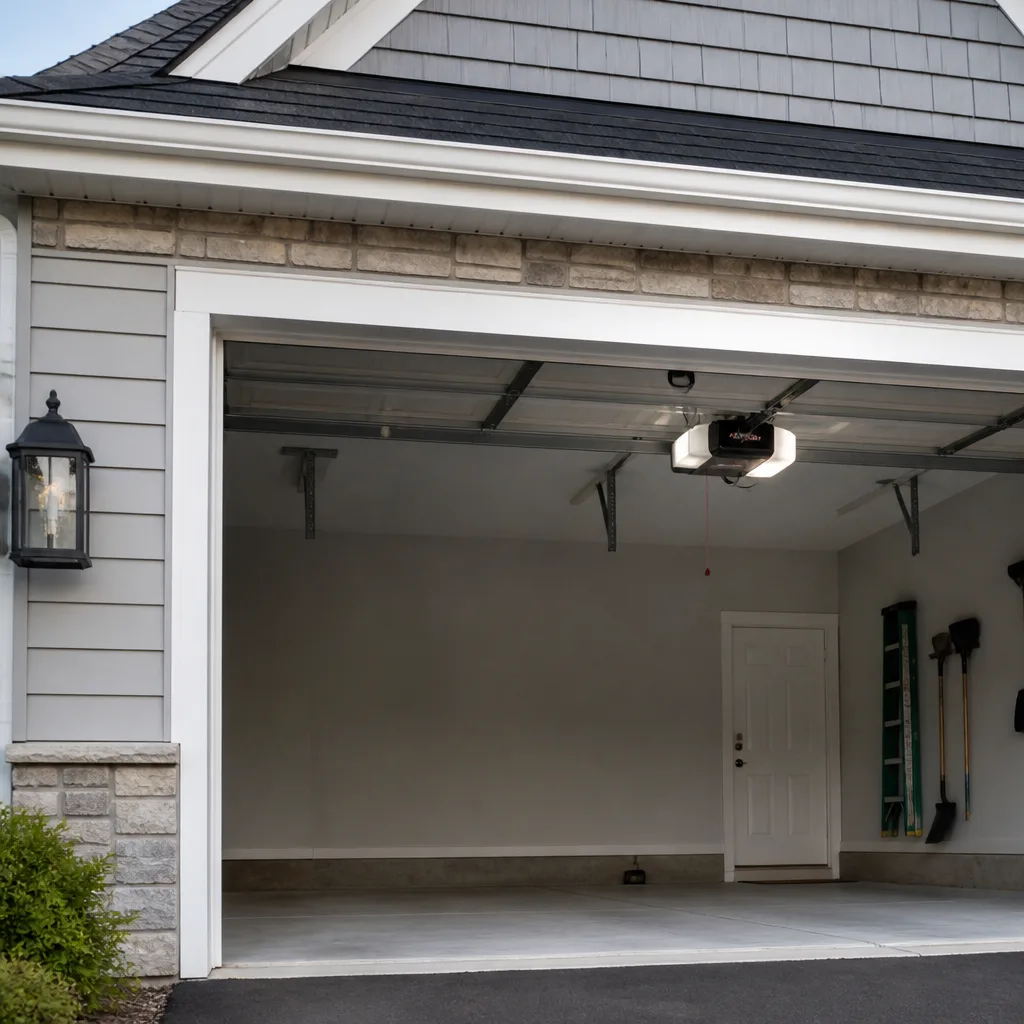 LiftMaster openers
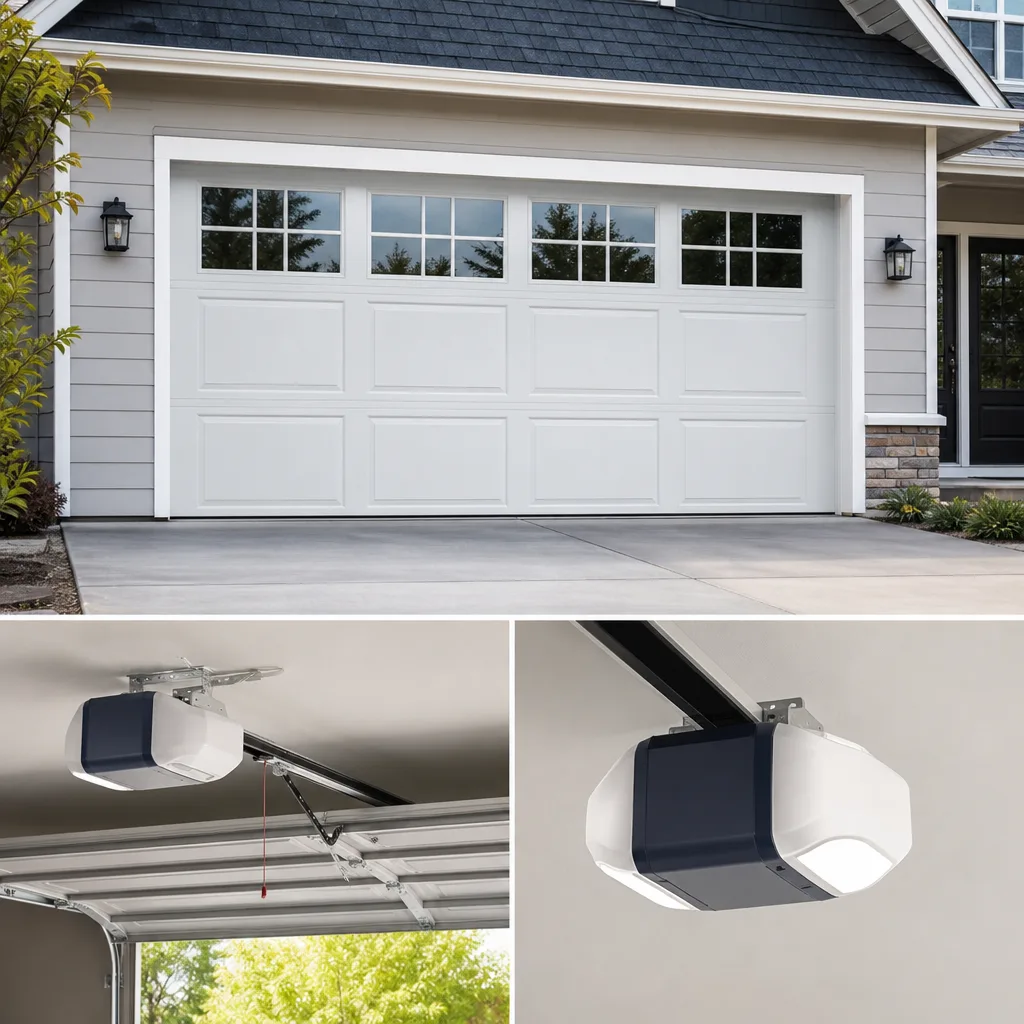 Chamberlain openers
Full 25-point door and opener safety check with every visit - springs, cables, rollers, tracks, and your LiftMaster or Chamberlain opener included
You get a price before we start. It does not change when the truck arrives.
Get your free estimateGarage Door Warning Signs: A Long Beach Homeowner’s Reference Guide
Two seconds. That’s the pause between a healthy garage door responding to a button press and one that’s already failing. In Long Beach, where salt air works on metal parts year-round and summer heat expands rails just enough to matter, that hesitation is rarely about age. It’s a force-limit fault, a strain signal, or a worn component telling you something specific before it breaks. Most garage door failures don’t happen without warning. They happen when homeowners can’t tell the difference between a symptom worth watching and one that required same-week action. This guide gives you that distinction. You’ll learn what each sound and movement pattern means, which signs demand immediate shutdown, which can wait for a scheduled appointment, and what Long Beach conditions do to accelerate every failure mode.
Styles & brands we work with
Quick Answer
The most common garage door warning signs in Long Beach are a door that hesitates before moving, grinding or squealing during operation, uneven movement with one side lagging, a visible gap between the door and the floor when closed, and an opener that reverses without reason. A hesitation of two seconds or more, a visible lean, or a grinding sound tied to the opener motor are same-week issues. A broken spring, snapped cable, or a door that will not move at all means stop using the door immediately and call a professional. Ignoring these signs typically converts a $150 cable repair into a $500 spring-and-opener replacement within 12 months.
Table of Contents
- Symptom-to-Cause Reference: What You Hear and See
- The Spring Warning Signs You Can Spot From the Ground
- Opener Reversal: A Safety Sensor Problem Until Proven Otherwise
- Seasonal Movement vs. Track Misalignment: The Difference That Protects Your Opener
- Two Signs That Mean Stop Using the Door Today
- Four Signs You Can Schedule This Week
- What Long Beach Climate Does to Garage Door Components
- Common Mistakes to Avoid
- When to Call a Professional
- Frequently Asked Questions
- The Bottom Line
Symptom-to-Cause Reference: What You Hear and See
Every garage door speaks in symptoms. The problem is that most homeowners translate those symptoms wrong. A grinding noise gets called “the door needs grease.” A grinding noise is almost never about grease. It’s metal parts making contact in ways they were not designed to. Here’s a reference table, built from what we see on service calls across Long Beach, from Bixby Knolls to Naples to the Park Estates: what you hear or see, what it actually means, and how fast you need to act.
| Symptom | Likely Cause | Urgency | Typical Repair Cost Range |
|---|---|---|---|
| Hesitation (1-3 seconds) before movement | Force-limit setting drift, failing capacitor, tired opener logic board | Schedule within 2 weeks | $80-$180 |
| Grinding or metallic scraping during opening | Worn rollers, dry ball bearings, track contact | Schedule this week | $120-$225 |
| Squealing or high-pitched whine | Dry or failing bearings, loose belt, misaligned drive | Schedule this month | $75-$160 |
| Door moves unevenly, one side lags | Track misalignment, stretched cable, broken spring on one side | Same-week if spring-related | $150-$340 |
| Gap between door and floor when closed | Limit setting adjustment, worn weatherstrip, misaligned track | Schedule this month | $60-$140 |
| Opener reverses immediately after closing | Safety sensor obstruction or misalignment, force sensitivity too high | Same-week (safety issue) | $85-$160 |
| Loud bang from inside the garage | Torsion spring snapped | Stop using door, call same-day | $250-$550 |
| Door jerks or shudders mid-travel | Worn chain tension, damaged drive gear, bent track section | Same-week | $140-$280 |
We built this table because Google shows you a hundred generic articles that say “if your garage door makes noise, call a professional.” That helps no one. You need to know whether the noise means a $90 roller replacement or a $500 spring system failure. The distinction is in the details. A metallic scrape that happens at the same point in the travel every time is usually a roller hitting a damaged track section or a misaligned hinge. A grind that changes pitch as the door moves is often the opener’s drive gear losing teeth. A single loud bang is a torsion spring letting go, and that’s an immediate stop condition. You can get more detail on our Garage Door Repair in Long Beach page.
The Spring Warning Signs You Can Spot From the Ground
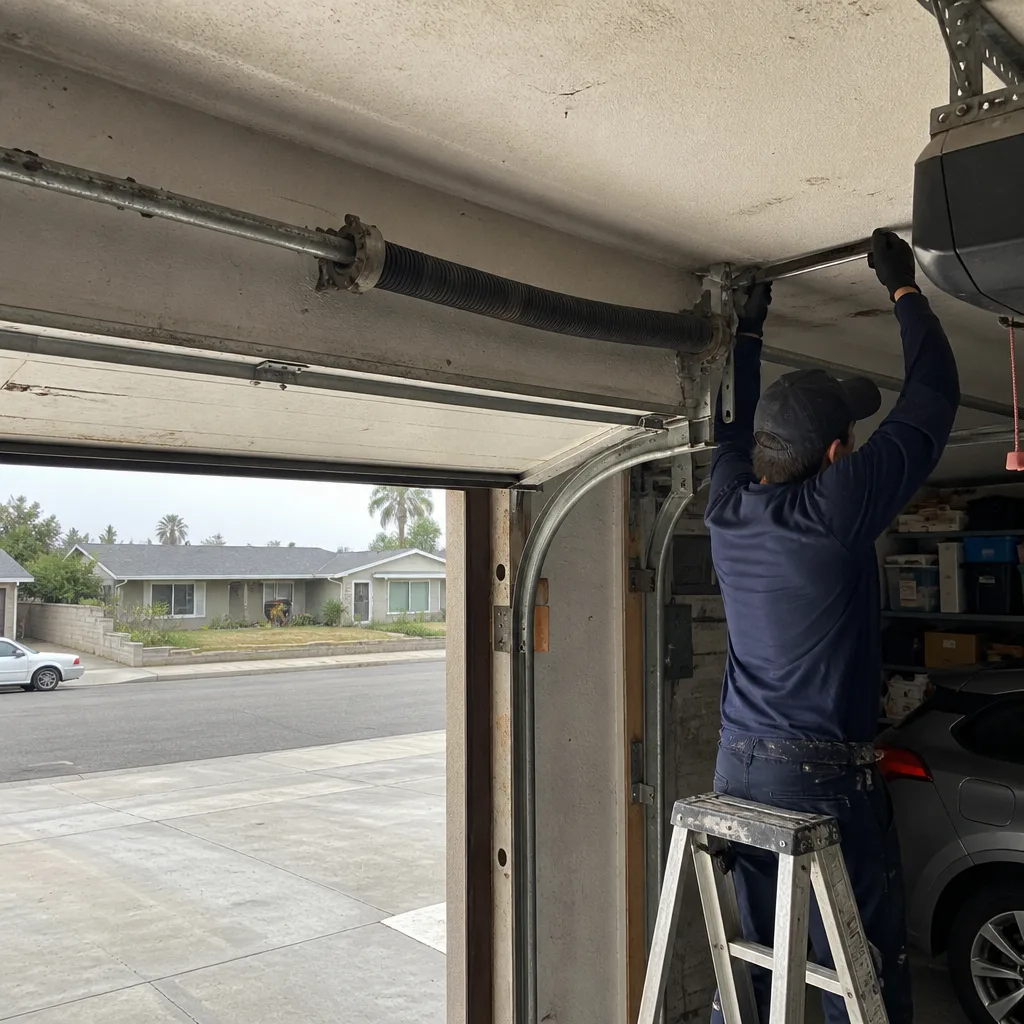
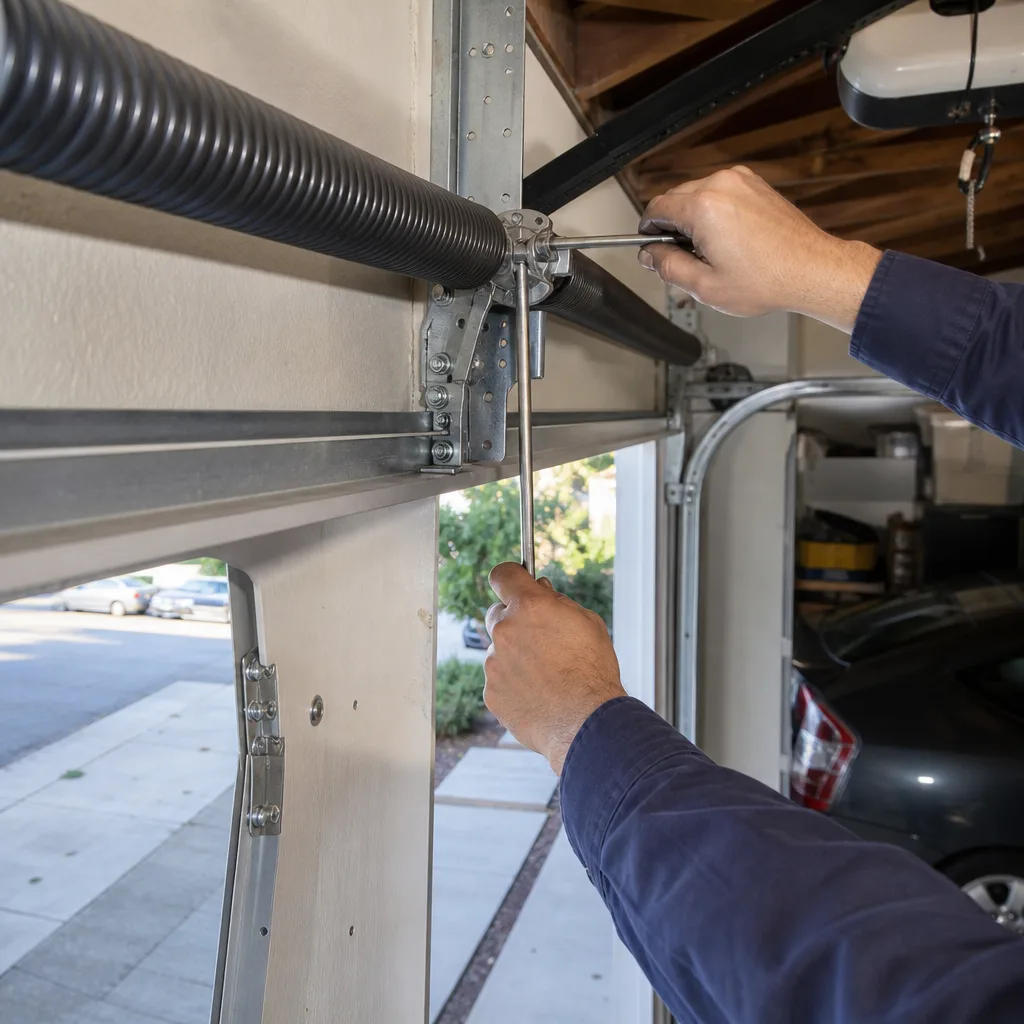
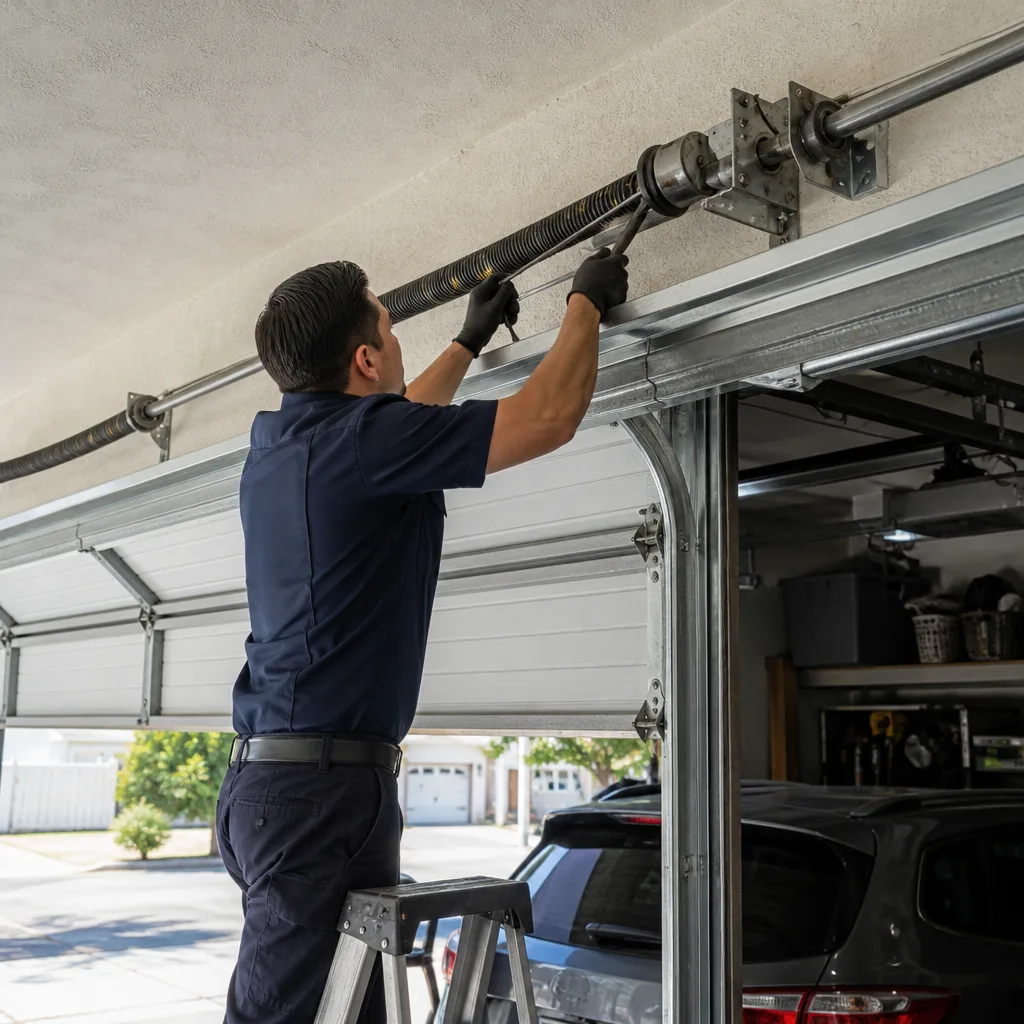
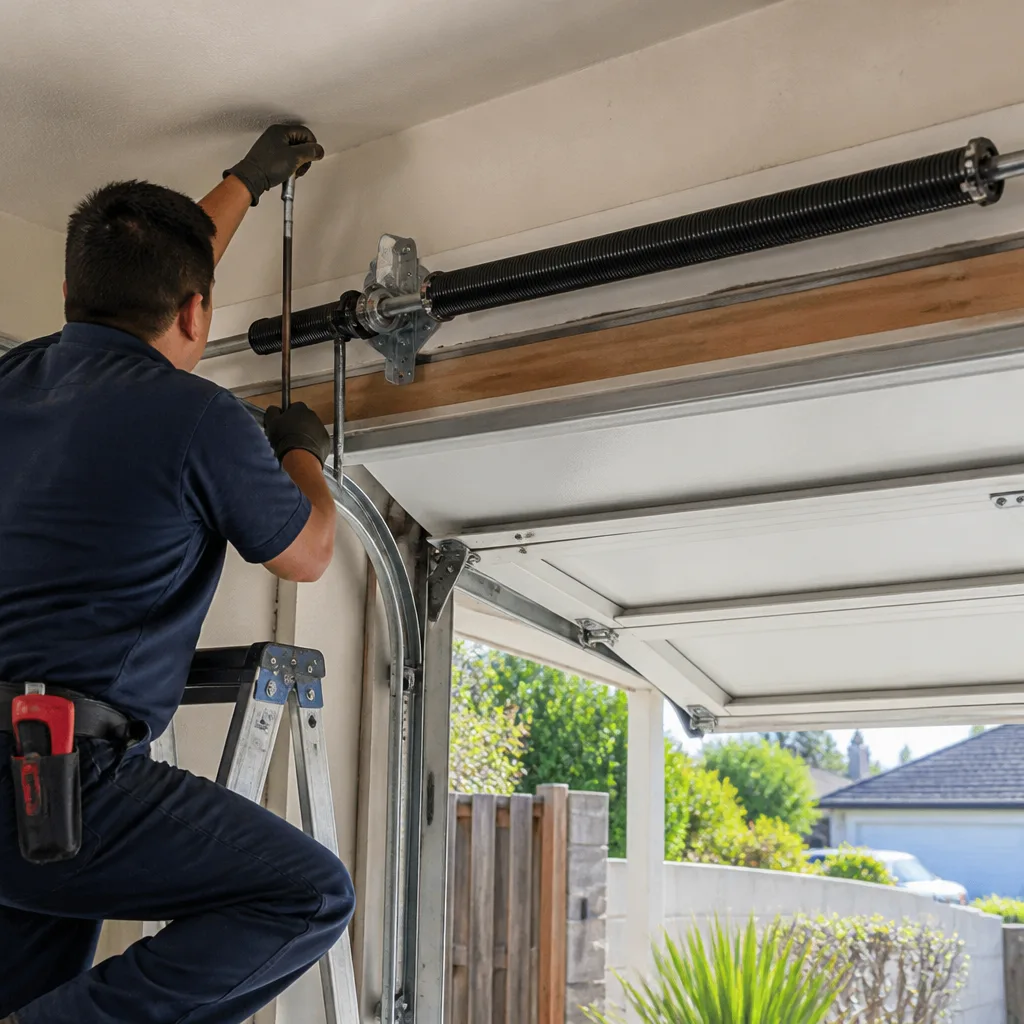
The torsion spring – the thick coiled spring mounted horizontally above the door opening – carries most of the lifting load on a standard residential door. It’s under several hundred pounds of tension. When it fails, it fails violently and without negotiation. But it almost always gives you a visual warning first, and you can spot those warnings from the ground without touching anything. Here’s what to look for, in plain English.
First, look for a visible gap in the coil. A healthy torsion spring is one continuous spiral with no breaks. When you see a separation of an eighth to a quarter inch between coils, that’s the spring stretching. It means the metal has begun to fatigue and the spring is working with reduced tension. This is not a “watch and wait” signal. A stretched spring is a spring in its final stage. The average residential torsion spring lasts 10,000 cycles, which in a typical Long Beach household works out to seven to ten years. If your house was built before 2016 and the door still has its original springs, you’re on borrowed time. This is when you call for garage door repair in Long Beach – not after the bang.
Second, look at the spring’s position relative to the shaft. It should sit square and centered on the torsion tube. If it looks like it’s leaning, or one end has pulled away from the center bearing plate, that’s the spring unwinding unevenly. This creates unequal tension, which makes the door lift crooked, which puts side-load pressure on the tracks, which wears rollers, which strains the opener. Failures compound.
Third, listen during operation. A spring nearing failure often produces a creaking or groaning sound as the coils bind and release. This is distinct from roller noise. Roller noise stays localized at the track. Spring noise comes from above your head, near the center of the door opening. If you hear it, schedule an inspection. The cost to replace a torsion spring before it snaps is the same as after, but you get to choose the day instead of being trapped with a door that won’t open on a Monday morning.
One thing you should never do: touch the spring, try to measure its tension, or apply any kind of lubricant to it based on advice from a forum. Torsion springs hold enough energy to cause severe injury. All visual inspection should happen from the ground, with the door closed, hands off. If you see any of these markers, tell the technician what you observed. We’ll confirm it during the diagnostic. Wade Mercer has been walking Long Beach homeowners through exactly this conversation for nearly 25 years.
Opener Reversal: A Safety Sensor Problem Until Proven Otherwise
This one deserves its own section because it’s the most commonly misunderstood warning sign in residential garage door mechanics. Your opener’s job when it senses resistance is to reverse. That’s a federal safety requirement, not a setting you can turn off or ignore. When an opener reverses mid-cycle, or immediately after touching the floor, the default assumption is that the safety sensors – the pair of photo eyes mounted four to six inches off the ground on each side of the door – have detected an obstruction or been knocked out of alignment. This is true even when there’s no visible obstruction.
A knee-high stack of anything, a rake handle leaning against the wall, a leaf that blew in through the side access door, or a cobweb thick enough to catch the beam can trip the sensor. In Long Beach, where garage doors stand open for hours in the afternoon and salt breeze moves through the space, dust and spider silk build up on the sensor lenses faster than you’d think. The first diagnostic step is clean the lens with a dry cloth, then check the alignment – both sensor units have small indicator LEDs that should be lit solid, not blinking.
If the lenses are clean and aligned and the door still reverses, the problem has nothing to do with obstruction. It’s likely one of three things: the force-sensitivity setting has drifted too high (which is a real problem, because it means the opener will keep applying force instead of reversing when it meets an actual child, pet, or object), the travel-limit setting has misread the floor position, or the opener’s internal logic board is failing. All three of these require a professional diagnostic. All three also carry liability exposure if ignored. An opener that reverses at the wrong time is the system’s safety mechanism doing its job. An opener that no longer reverses when it should is a system you should not be running. Our garage door opener repair in Long Beach service starts with confirming the sensor status before touching any setting, precisely because the sensor is the safety net. That’s the right order of operations.
Seasonal Movement vs. Track Misalignment: The Difference That Protects Your Opener
Long Beach sits in hardiness zone 10b. We don’t get real winter. What we get is a daily temperature swing that most of the country doesn’t notice and a marine layer that hangs over the coastal and port-side neighborhoods for half the year. Both of these things affect your garage door in measurable ways. And the way to tell whether your door is just breathing with the weather or has a real track problem is in how the symptom behaves.
Normal seasonal movement is uniform. The door may open slightly slower on a cold morning because the torsion spring loses a small amount of tension as the metal contracts. You might hear a mild rubbing sound in the first few seconds of operation after a damp night, as rollers work through the condensation film that forms on uninsulated steel doors in neighborhoods like Los Altos and Signal Hill. These symptoms are transient. They disappear once the day warms up or after the first full cycle.
Track misalignment doesn’t disappear. It’s directional. A door with a misaligned track will lean slightly to one side at a particular point in its travel, or resist at the same spot each cycle, or scrape consistently against one rail while leaving a visible gap on the other. Where seasonal movement is uniform, misalignment is localized and repeatable. You can map it: stand inside the garage, operate the door once, and watch. If the resistance happens at the same spot each time, that’s mechanical. It’s not the weather. Here’s a simple observation sequence:
- Open the door to the halfway point and stop it with the remote.
- Look at the gap between the door edge and the vertical track on both sides. It should be even, side to side, within roughly a quarter inch.
- Close the door slowly and listen for scrape points. Note whether the scrape happens at the same point in the travel each cycle, or whether it’s random.
- Repeat the next morning. If the scrape or lean is still there in the same place, you have track misalignment – not seasonal movement.
The reason this distinction matters is the opener motor. A misaligned track means increased drag. Increased drag means the opener’s strain sensor and gears work harder every single cycle. You’ll hear the motor changing pitch, or working longer to do the same job. Left alone for a year, track misalignment burns out opener gears or the drive belt. That’s a $250 to $450 repair that was preventable with a $120 track adjustment. In Long Beach’s salt air, the timeline compresses because track brackets and hardware corrode faster than inland. The schedule-ahead repair is always cheaper than the emergency one. If you need cable work in conjunction with track adjustment, see our garage door cable repair in Long Beach page for scope and pricing context.
Two Signs That Mean Stop Using the Door Today
Some warning signs mean schedule an appointment. Two of them mean stop. Right now. Do not operate the door again until a professional has looked at it. Here’s why these two are different.
First: a snapped cable or a broken spring visible from the ground. The torsion spring and the lifting cables work together to counterbalance the door’s weight. When one fails, the other takes the entire load – and it was not designed for that. A door with a broken spring on one side will continue to open if you force it, but every cycle is putting exponentially more strain on the remaining spring and the cable, and on the opener. The door can drop hard, suddenly, if the second spring or the remaining cable lets go during operation. A dropping garage door weighs 150 to 400 pounds. Do not test it. Do not try to open it by hand. A snapped cable is visible as a loose wire hanging along the track or coiled on the floor. A broken torsion spring is visible as a gap between the coils and often accompanied by a loud bang that sounds like a firecracker. If you see either, stop using the door and call a professional. Every garage door repair company in Long Beach will tell you the same thing, because every one of them has arrived at a house where someone tried to force the door and made it worse.
Second: the door reverses in a way that has changed suddenly, especially if it now closes with more force, or if the reversal behavior fluctuates. This is the failure mode of a safety sensor or force-sensitivity system that is no longer doing its job. When a door’s reversal becomes inconsistent – sometimes reversing, sometimes not – the safety mechanism is failing intermittently. An intermittent safety failure kills. Every year in the United States, garage doors cause serious crush injuries, almost all of them involving an automatic opener operating with a bypassed or failing safety sensor. If your opener’s reversal behavior has changed, stop using the door and call. This is not a same-week issue. It is a same-day issue.
Four Signs You Can Schedule This Week
Most warning signs don’t require you to stop using the door entirely. They require you to stop ignoring them. Here are the four most common ones we see in Long Beach where a scheduled appointment within the week is the right move, with what each sign means and how to think about cost.
One: hesitation before the door starts moving. Press the remote. Nothing happens for a full second or two. Then the door starts normally. Homeowners write this off as “the opener being old.” It’s not age. A healthy opener starts instantly. Hesitation means the force-limit setting has drifted too high (the opener is trying to generate too much travel force) or the capacitor that provides the starting jolt is wearing out. Either way, it’s a component failure in the making. $80 to $180 to resolve now, versus a door that won’t open at all on a morning you have somewhere to be.
Two: a grinding noise that changes pitch or volume each cycle. A consistent, low-level sound that’s been there for years is one thing. But when you hear a grind that’s new, or that’s getting louder, or that changes in character – especially when paired with the door jerking as it moves – you’re hearing the drive gear or the belt pulley wearing down. On LiftMaster and Chamberlain openers especially, a worn drive gear will start as a growl and progress to a full skip, at which point the door may lock up mid-travel. Catch it at the growl stage and you’re replacing a $90 gear. Wait until the skip and you’re often replacing the entire opener.
Three: visible door lean while in motion. When the door is fully open, it should rest level, horizontal, with both sides on the same plane. If one corner hangs visibly lower, or if the door travels with one side leading the other, you have a track misalignment, a damaged roller bracket, or an imbalanced spring system. This puts uneven load on the opener with each cycle, and causes the door to bind against the track, which accelerates roller wear. On garage door repair in Long Beach calls, we treat any visible lean as a same-week item, because the compounding failure sequence picks up speed once misalignment starts.
Four: a gap between the door and the concrete floor when closed. In Long Beach, this one usually is not what people assume. They assume the door came out of adjustment. Often it’s the concrete that moved. Our soil here – particularly in the Belmont Shore and Peninsula areas, and in pockets of Signal Hill where the expansion and contraction cycle is more aggressive – moves more than people expect. The slab shifts a quarter inch, and suddenly the door that used to close flush now shows daylight under one corner. That’s not a broken door. That’s a limit setting or track adjustment compensating for a slab that’s moved. It’s a small fix if done early. If ignored, the door will seek the floor at the wrong point each cycle, which causes the opener to over-travel or under-travel, and that’s what leads to premature opener failure.
One thing to note on all four of these: the price you’re quoted is the price you’ll pay. We quote a written number before any work starts, and that number doesn’t move when the tech sees the door. For any Long Beach homeowner who’s been burned before by a low phone estimate that became a much bigger invoice at the door, that’s the difference between a company you can plan around and one you can’t. The written-price-first policy is part of The Garrison Standard, and it’s part of every service call we run.
What Long Beach Climate Does to Garage Door Components
Here’s the section that generic garage door guides miss entirely. Most of what’s written about garage door maintenance online was written for homes in Ohio, or Arizona, or somewhere with weather. Long Beach has a climate that’s harder on garage door components in a very specific way: not through freeze-thaw cycles or extreme heat, but through constant, low-grade salt air exposure and a humidity cycle that runs year-round.
Salt air is an electrolyte. It accelerates oxidation on every metal surface it touches, and it doesn’t discriminate between the spring, the hinges, the track, the cables, and the opener chassis. What we see on Long Beach door hardware, especially in the neighborhoods west of the 710 – Rose Park, Willmore, the historic district – is surface corrosion that starts earlier and travels faster than the same hardware in inland Orange County. This corrosion manifests in a couple of specific ways. Roller ball bearings, which are sealed units, start to bind as fine corrosion pits form on the bearing race. Hinge pins stiffen. Cable strands rust. The torsion spring, which is tempered steel under tension, develops micro-pitting that shortens its cycle life. A spring that might last 12,000 cycles in Bakersfield will often last 8,000 to 9,000 in Long Beach, simply because the surface oxidation creates stress risers that accelerate fatigue.
Humidity compounds the problem. The marine layer that sits over Long Beach in the early morning hours, especially in spring and early summer, condenses on cold steel surfaces inside the garage. When the door opens and the day warms up, that moisture evaporates. The cycle repeats. Moist inside, dry outside, moist inside, dry outside. This is a corrosion engine. It also affects the opener’s electronics over time. We replace more logic boards in Long Beach coastal homes than in comparable inland cities, and we’ve been doing this long enough to know it’s the humidity exposure. The fix is not a garage heater. The fix is awareness and a slightly shorter inspection interval. If your home is within two miles of the water, check the door’s moving hardware visually every three months instead of twice a year. Fifteen minutes of looking costs nothing and catches a rusty cable before it becomes a snapped cable.
Common Mistakes to Avoid
Here’s what homeowners get wrong, in ranked order of cost impact, based on what we see on Long Beach service calls. Each one is a decision that seemed reasonable at the time and turned a small repair into a big one.
- Lubricating a grinding noise. If the noise is from a roller bearing or a worn gear, grease changes nothing but the volume. It doesn’t fix the underlying wear. You’ve bought yourself a quieter couple of weeks and a repair that’s now slightly larger than it was. Dry ball bearings are not a lubrication problem. They’re a replacement item.
- Continuing to use the door after a spring snap. The math is cruel: one broken spring means the remaining spring is now doing double duty. It will fail soon, and when it does, the door can drop hard. The cost to replace both springs is not double the cost of one. It’s usually within $40 of the single-spring price. Wait too long and you may be adding a cable repair and a track realignment to the invoice.
- Ignoring opener reversal changes. Somewhere along the line, “the door reverses sometimes” gets filed under “quirks.” It’s not a quirk. It’s a safety mechanism saying something has changed. The problem is that intermittent failures often progress to non-intermittent failures, and a door that no longer reverses when it should is a door that can injure someone. Call when the behavior changes.
- Attempting DIY spring or cable replacement. YouTube makes everything look possible. Torsion springs are under several hundred pounds of tension. The tools matter, the sequence matters, and a wrong move with a winding bar causes injuries that no video can prevent. If you wouldn’t rewire your own electrical panel, don’t touch a torsion spring. The cable and spring work on every Long Beach door we service is done by people who’ve done it thousands of times – and that’s why we carry the liability insurance and the training.
- Delaying a track inspection because “the door still works.” This mistake shows up most often in track misalignment and worn roller cases. The door works, until the drag load finally overwhelms the opener. Then it doesn’t work, and the repair is triple what the track adjustment would have been. The opener is not designed to compensate for a binding track indefinitely. It’s designed to operate a balanced, aligned door.
- Using the door manually after a mechanical failure without disconnecting the opener. When a spring or cable fails, the door’s weight is no longer counterbalanced. If you pull the release cord and try to lift the door by hand, you may be lifting 150 to 400 pounds of dead weight. That’s a back injury waiting to happen, or a door coming down on you. If the door failed mechanically, leave it alone and call.
When to Call a Professional
You should call a professional any time the door’s weight-bearing components – spring, cable, track alignment, opener motor – are involved. That’s the structural and safety layer of your door system. Cosmetic items like weatherstripping, remote battery changes, and sensor lens cleaning are things you can handle yourself. But when a spring has snapped, a cable has frayed, a track has walked out of alignment, or the opener’s reversal behavior has changed, the risk-reward math tilts hard toward a trained tech. A balanced door is a safe door. An unbalanced door is a loaded mechanical system waiting for the wrong input. In Long Beach, Brock Garage Doors Long Beach offers free estimates for repair and opener service calls. Call (562) 337-3993 and a live person will answer, day or night, no voicemail tree. You’ll get a written price before any work starts, and every repair is covered in writing for 365 days.
Frequently Asked Questions
Garage door spring repair in Long Beach typically runs $250 to $550, depending on whether we’re replacing a single spring or both, the spring’s cycle rating, and the door’s size and weight. Torsion springs on standard two-car doors cost more than extension springs on single-car setups. The price you’re quoted is the price on the invoice, written and handed to you before any work starts, and it includes the full year of written coverage under our 365-day guarantee. Call (562) 337-3993 for an exact quote.
Yes. We carry the most common spring, cable, roller, and opener parts on our service trucks, so most repairs in Long Beach are completed on the first visit, same day. For less common parts, we order and schedule the return visit before the tech leaves your property. A live person answers our phones 24/7, so if you call in the morning, there’s a good chance the door is fixed by evening.
A garage door that opens slower in the morning is usually responding to ambient temperature and moisture. Cold or damp air slightly reduces torsion spring tension, and the marine layer over Long Beach adds a condensation film to the rollers and track. As long as the door returns to normal operation after the first full cycle, this is not a failure. Consistent, repeatable resistance at the same point in travel is the sign to watch for. That’s a track misalignment or worn roller, not the weather.
No. Every Brock Garage Doors Long Beach service call starts with a written price quoted before any work begins, and that number doesn’t move once the tech inspects the door. If additional work is discovered mid-repair, you get a new written price for that additional scope and you decide whether to proceed before anything else happens. This is The Garrison Standard, and it’s how every job runs. Call (562) 337-3993 to get your free estimate.
Yes. Our Long Beach service vans are stocked with torsion springs in common sizes, extension springs, lifting cables, roller sets, hinges, safety sensors, opener gears, and other wear items. The most common repairs are completed in one visit. For doors with specialty hardware or uncommon brands like Raynor or Genie, we may need to order a specific part, and we’ll tell you that before we leave, with a written price for the follow-up visit.
Place a roll of paper towels or a small box on the floor directly under the door’s path, then close the door. It should reverse immediately upon contact. If it doesn’t reverse, stop using the door and call a professional. Also check the sensor’s alignment indicator – the small LEDs on each sensor unit should be lit solid, not blinking. A blinking LED usually indicates misalignment or an obstructed beam. If cleaning and realigning the sensors doesn’t fix a recurring reversal issue, call (562) 337-3993. The repair is typically under $160.
The Bottom Line
Garage doors don’t break without warning. They ask for attention in specific, decodable ways: a two-second hesitation, a grinding sound that changes pitch, a visible lean, a gap where the door meets the floor. Learn to read the signs and you control the timeline. You choose the day, you know the price, and you avoid the Monday-morning emergency where the door won’t open and the kids are late for school. When the sign says “stop,” stop. When it says “schedule,” schedule. And when you need a written price from a company that backs its work in writing for 365 days, call (562) 337-3993. A real person answers, day or night, in Long Beach.
Written by Wade Mercer, Owner at Brock Garage Doors Long Beach, serving Long Beach since 2001.
See the difference
 Before
 After
After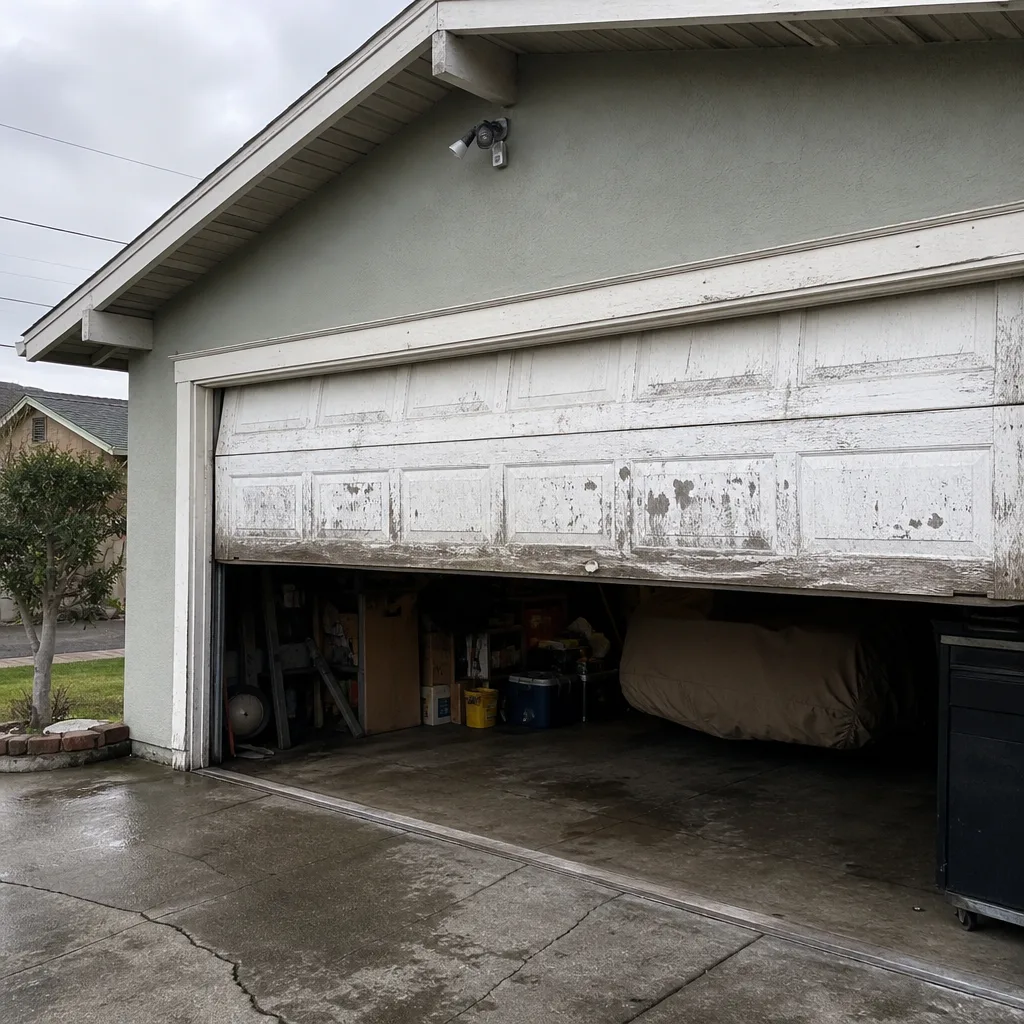 Before
 After
After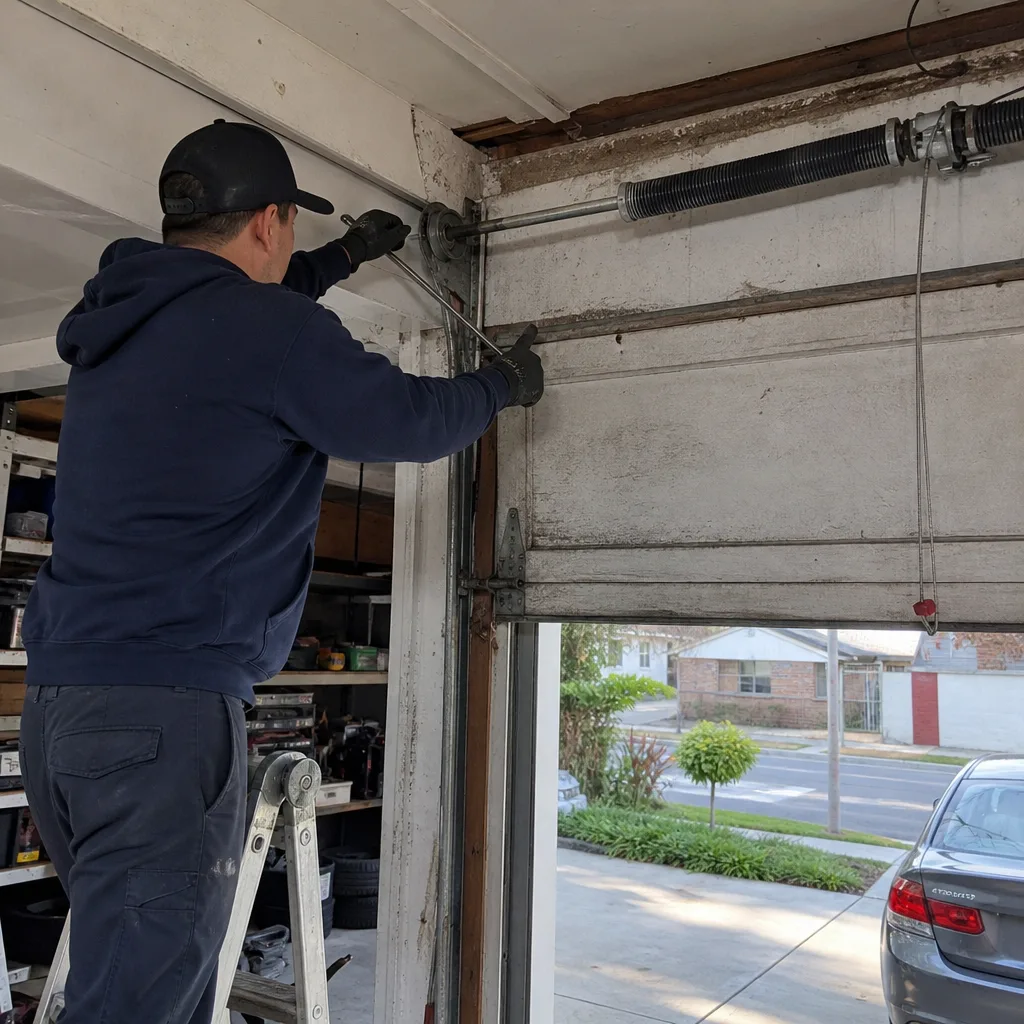 Before
 After
After